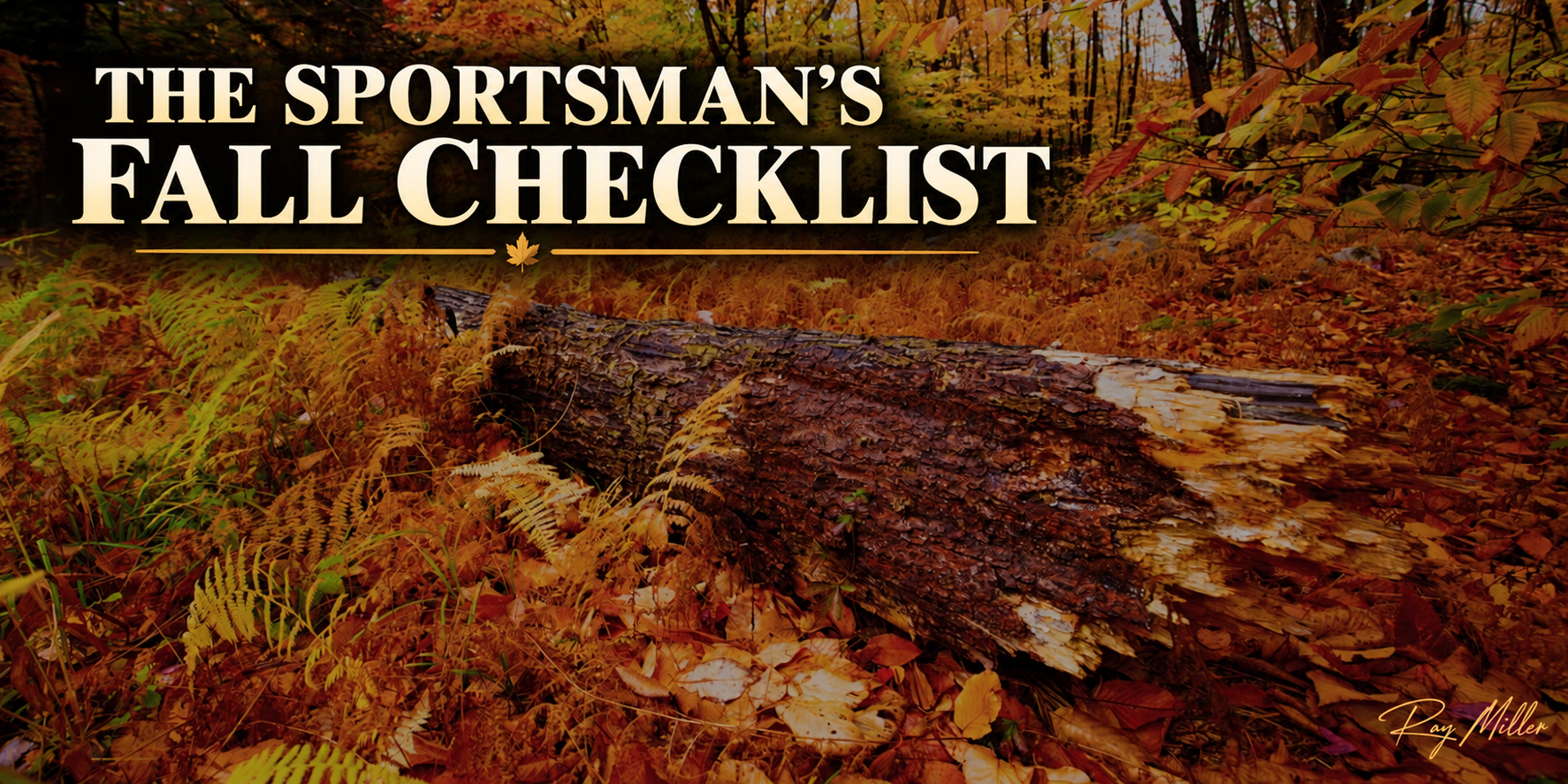
The Sportsman’s Fall Checklist
A practical guide to preparing your gear, your dog, your vehicle—and yourself—for the best season of the year
There is something about the first cool morning of fall that changes a sportsman’s entire outlook. The air feels sharper. The woods begin to trade their summer green for red, gold, and orange. Trout become more active, migrating birds return, and hunting seasons finally appear on the calendar instead of somewhere in the distant future.
But fall also has a way of arriving faster than expected.
One day you are enjoying the final stretch of summer; the next, you are looking for a missing glove, discovering that your waders leak, or realizing that your dog’s first-aid kit is still sitting on the workbench. A little preparation now can prevent those small problems from stealing time from the experiences we wait all year to enjoy.
My own fall may include chasing false albacore, fishing Pennsylvania trout streams, traveling to the Salmon River for steelhead, practicing with my bow, and taking Phinnigan north for his first grouse season in Maine. Each pursuit requires different equipment, but the principle is always the same: prepare at home so you can be fully present in the field.
Here is my Sportsman’s Fall Checklist.
Hunting Gear: Start With the Essentials
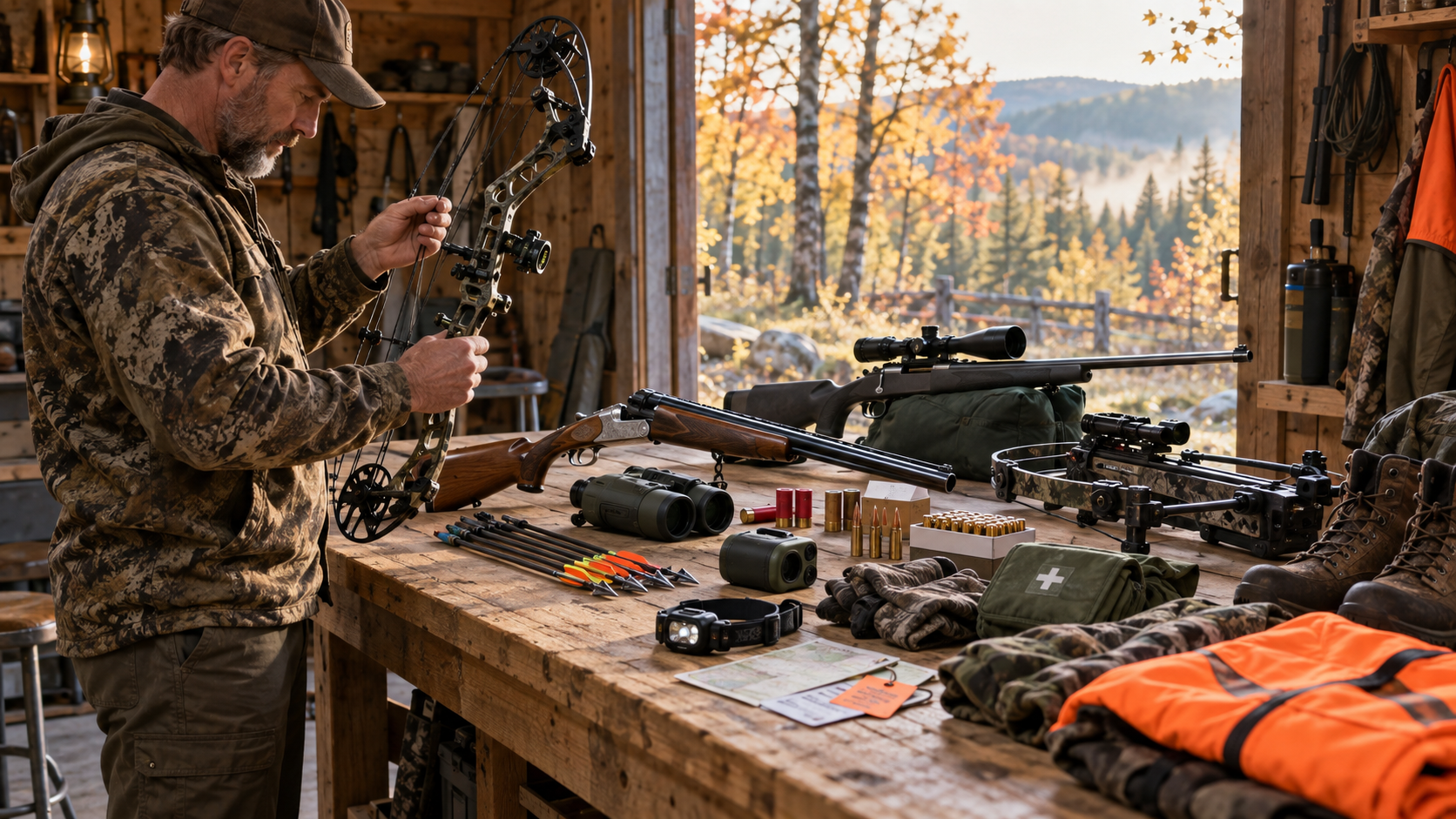
Whether you hunt with a bow, rifle, shotgun, or crossbow, begin by inspecting the equipment responsible for making an accurate and ethical shot.
For archery hunters, check strings and cables for wear, confirm that every screw and accessory is secure, and inspect each arrow for cracks or damage. Make sure your broadheads are installed correctly and that your hunting arrows strike where your practice arrows do. A target in the backyard cannot duplicate the excitement of a deer appearing in range, but regular practice builds a dependable routine when that moment arrives.
Shotgunners should clean and inspect their firearms, confirm choke selections, and pattern the loads they plan to carry. Do not assume a favorite shell will perform the same way in every gun. Rifle hunters should verify their scopes, mounts, slings, and zero well before opening day.
Clothing deserves the same attention. Inspect boots, replace worn laces, treat leather when necessary, and make sure last year’s layers still fit comfortably. Gather blaze orange, gloves, hats, rain gear, and extra socks now—not the night before a hunt.
Hunting checklist:
Inspect and clean firearms, bows, and crossbows
Check arrows, broadheads, ammunition, and shotshells
Confirm sights, scopes, and point of impact
Pattern the shotgun or practice from realistic field positions
Inspect boots, clothing, rain gear, and blaze orange
Replace batteries in rangefinders, headlamps, and electronic hearing protection
Check licenses, permits, tags, and season dates
Pack a small first-aid kit and emergency supplies
Fishing Tackle: Prepare for Changing Conditions
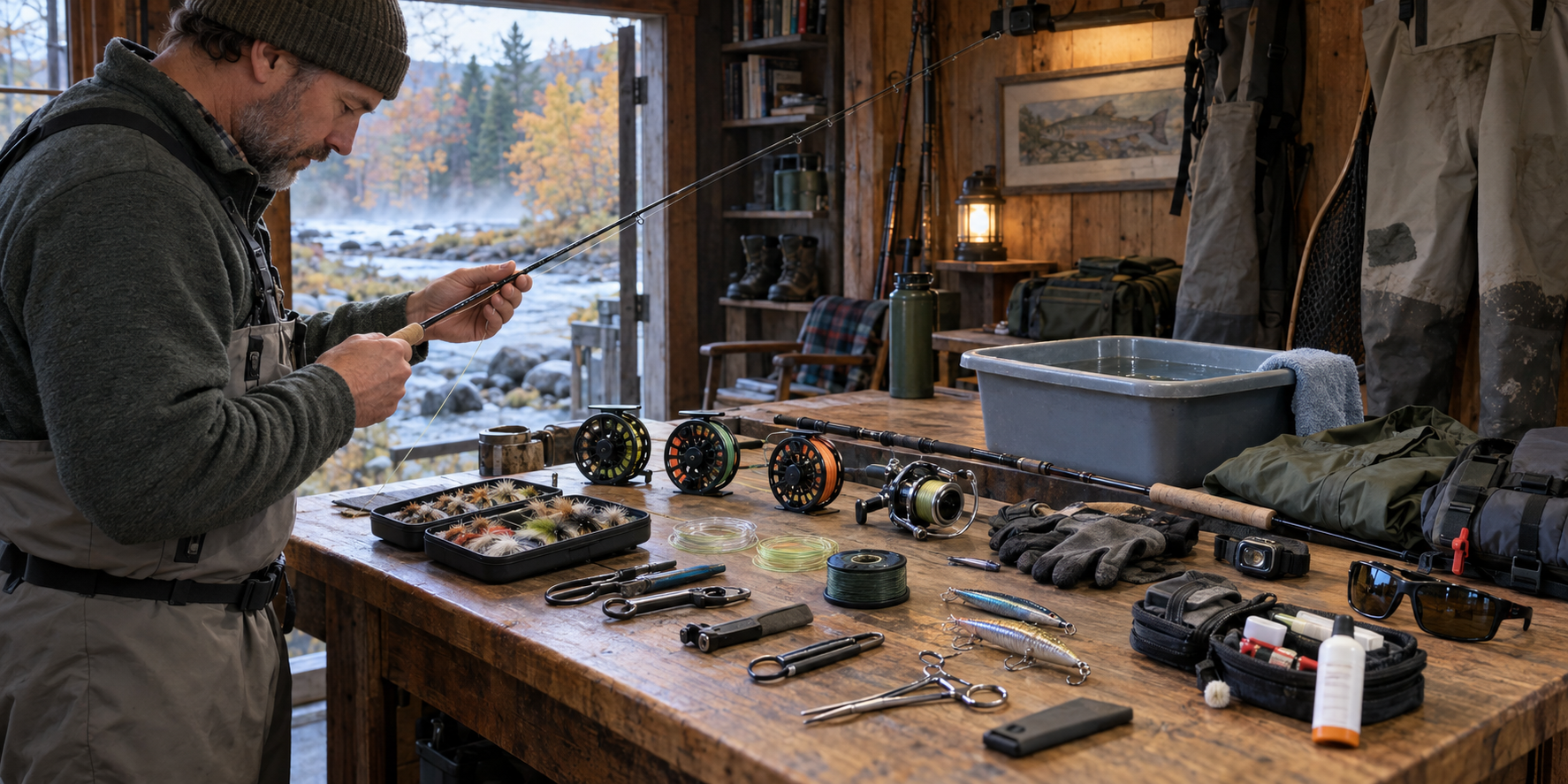
Fall fishing can be spectacular, but it asks a great deal of our equipment. Saltwater, cold mornings, powerful fish, sharp rocks, and rapidly changing weather will expose any weakness we overlooked at home.
Fly anglers should inspect rods for damaged guides, clean reels, check backing connections, and examine fly lines for cracks. Replace old leaders and organize flies by destination. The box I carry for Pennsylvania trout is not the same one I take for Great Lakes steelhead or false albacore.
For conventional tackle, inspect every rod guide and test reel drags under pressure. Replace questionable line rather than hoping it lasts one more trip. Check split rings, hooks, swivels, and leader material. Saltwater gear—especially reels, pliers, and lures—should be rinsed and inspected after every outing.
Build a small repair kit containing nippers, forceps, spare leader material, line, tape, a hook sharpener, and a multitool. It will not take much room, and sooner or later it will save a day on the water.
Fishing checklist:
Inspect rods, guides, ferrules, and reel seats
Clean reels and test drags
Check fly lines, backing knots, and leader connections
Replace old monofilament or braided line
Sharpen or replace rusty and damaged hooks
Restock leaders, tippet, swivels, and terminal tackle
Organize flies and lures for each target species
Check waders and rain jackets for leaks
Pack polarized glasses, sunscreen, gloves, and a headlamp
Confirm personal flotation devices are accessible and in good condition
Dog Equipment: Prepare the Partner, Not Just the Gear
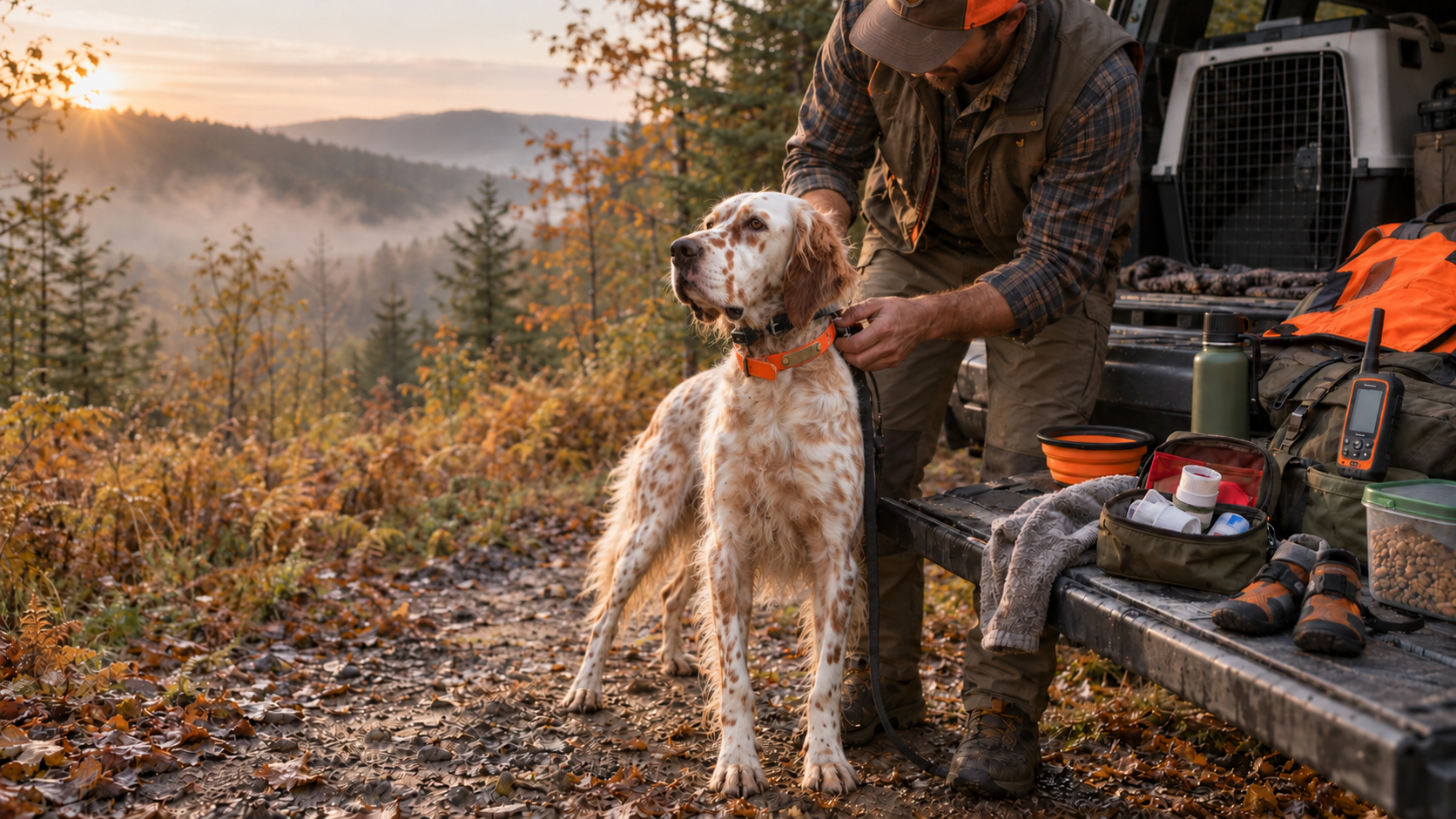
This section means more to me this year because Phinnigan is preparing for his first upland season. With a young dog, the goal is not to create a finished bird dog overnight. It is to build confidence, encourage desire, and make every trip afield safe and positive.
Before the season, inspect collars, leads, harnesses, bells, beepers, and tracking equipment. Charge every device and practice using it before you enter unfamiliar country. Confirm that identification tags are readable and that microchip information is current.
Conditioning is equally important. A dog should not move directly from the couch into a full day of hunting. Gradually increase walks and field sessions, paying close attention to paws, hydration, weight, and recovery. Keep training enjoyable and resist the temptation to demand too much too soon—especially from a pup experiencing wild birds for the first time.
Carry a dog-specific first-aid kit and learn how to use it. Include gauze, self-adhering wrap, antiseptic, tweezers, a tick-removal tool, styptic powder, saline, and any veterinarian-recommended items. Save the contact details for your regular veterinarian and locate an emergency clinic near your destination before leaving home.
Dog checklist:
Inspect collars, leads, harnesses, and identification tags
Charge and test tracking, GPS, beeper, and lighted collars
Update microchip and emergency-contact information
Build conditioning gradually before opening day
Inspect and toughen paws; pack boots or paw protection if appropriate
Carry food, water, collapsible bowls, towels, and bedding
Pack a dog first-aid kit and prescribed medication
Confirm vaccinations and preventive care with your veterinarian
Locate emergency veterinary services near camp
Pack a crate or secure vehicle-restraint system
Photography Supplies: Be Ready When the Moment Appears
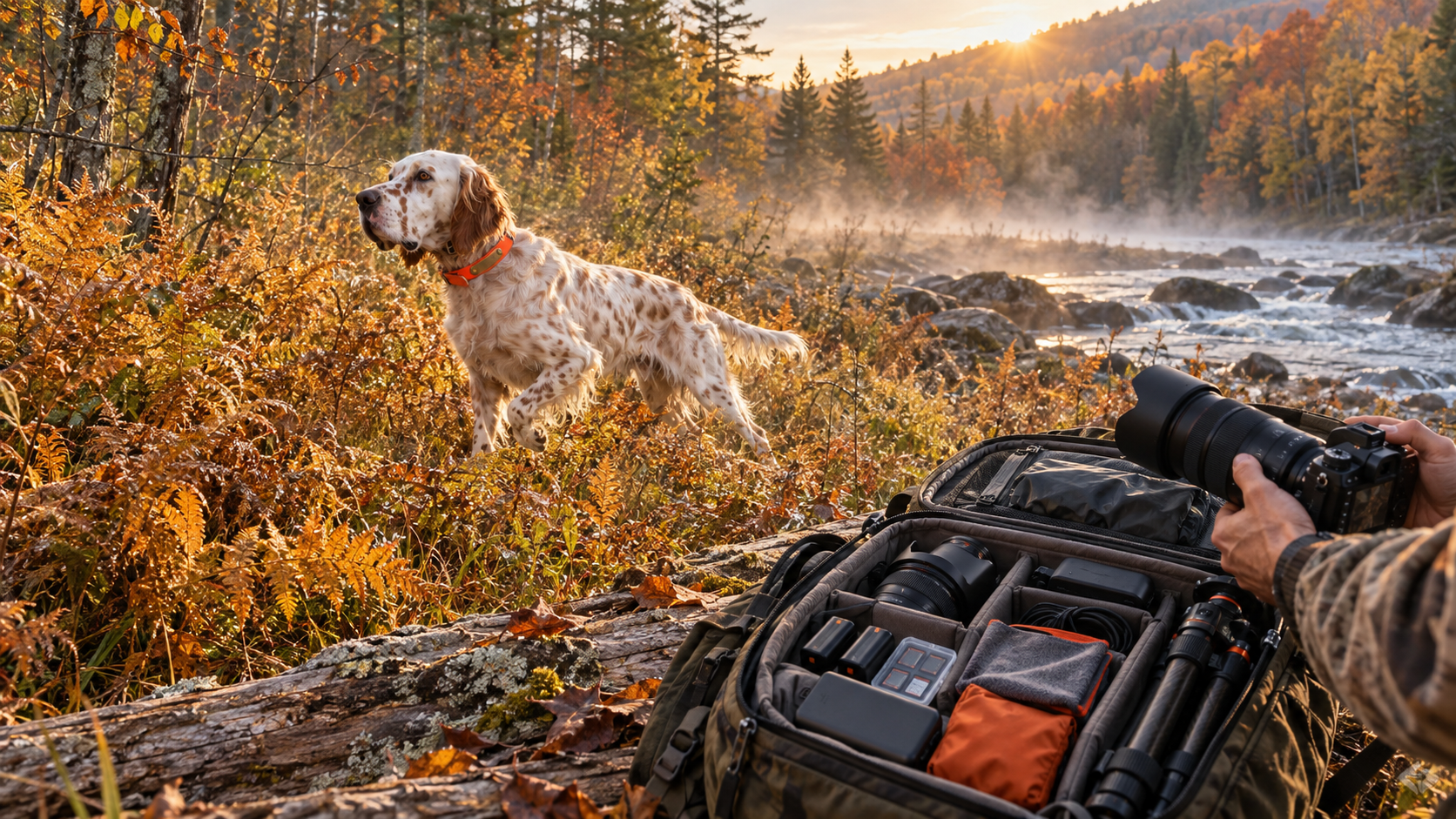
Some of the most memorable moments outdoors happen quickly: a setter locked on point, mist lifting from a trout stream, autumn light falling across a ridge, or a fish flashing beside the boat. The best camera is the one that is ready when the moment arrives.
Clean lenses and sensors, format memory cards only after backing them up, and charge every battery. Cold weather can shorten battery life, so carry a spare close to your body. Pack a lens cloth and a waterproof cover, even when the forecast looks favorable.
Think about the story you want to bring home. Capture the broad landscape, but also photograph the details—the old shotgun leaning against camp, wet boots beside the door, flies arranged on a patch, a dog asleep after a long day, or friends gathered around the fire. Those quieter images often tell the story better than a traditional grip-and-grin photograph.
Photography checklist:
Clean the camera body, lenses, and phone lens
Charge batteries and pack extras
Empty, format, and pack additional memory cards
Carry a lens cloth, dry bag, and rain cover
Pack a tripod or compact support when useful
Confirm camera date and time settings
Back up images before every trip
Include a small power bank and charging cables
Vehicle Preparation: The Adventure Begins in the Driveway
Many fall adventures require long drives on dark highways, gravel roads, or remote logging tracks. Your vehicle is as important as any rod, bow, or shotgun you carry.
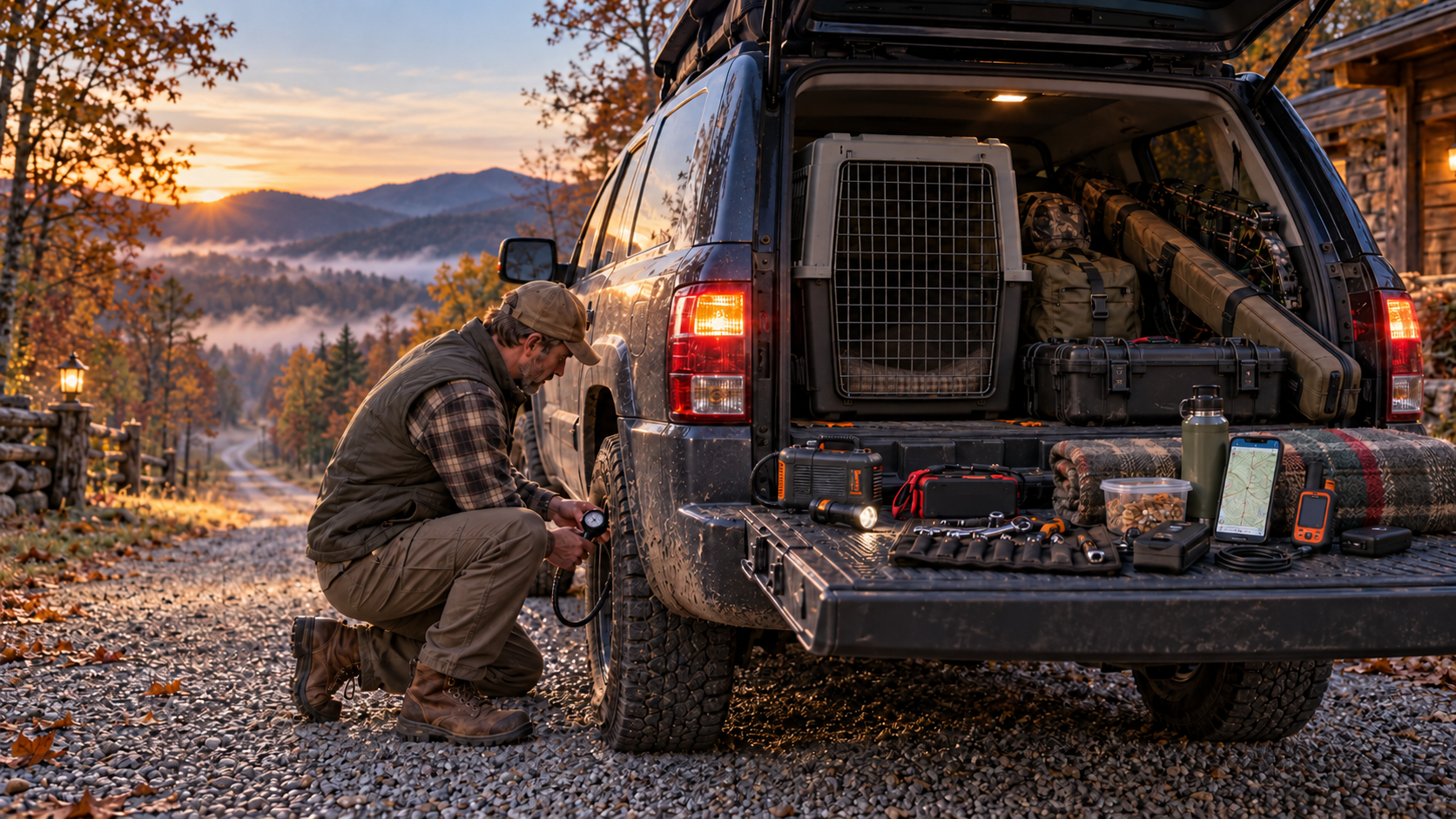
Check tire pressure—including the spare—and inspect tread depth. Top off fluids, test the battery, replace worn windshield wipers, and make sure headlights and brake lights work. Keep jumper cables or a jump pack, a tire inflator, basic tools, a flashlight, and warm clothing in the vehicle.
Remote travel deserves additional planning. Download offline maps before leaving reliable cell service. Carry food, water, a blanket, and a communication device appropriate for the country. Let someone know your route, destination, and expected return time.
Vehicle checklist:
Check tires, spare tire, pressure, and tread
Inspect oil, coolant, washer fluid, brakes, and battery
Test lights and replace worn wiper blades
Pack a jump starter, tire inflator, pressure gauge, and basic tools
Carry an ice scraper, blanket, food, and drinking water
Secure firearms, bows, rods, cameras, and dog crates properly
Download offline maps and carry charging cables
Fill the fuel tank before entering remote areas
Travel Planning: Remove Surprises Before Departure
The farther we travel, the more important organization becomes. Confirm lodging, guide arrangements, flights, rental vehicles, transfer times, and baggage restrictions. If you are flying with fishing rods, firearms, ammunition, or other specialized equipment, review the airline’s current policies well before departure.
Create both a printed and digital copy of your itinerary. Include reservation numbers, addresses, emergency contacts, license information, and travel-insurance details. Check the forecast, but pack for conditions beyond the forecast. Fall weather rarely feels obligated to follow the plan.
For international trips, verify passports, entry requirements, permits, and the rules governing sporting equipment. Never wait until the final week to discover that a document needs to be renewed.
Travel checklist:
Confirm reservations, guides, transfers, and meeting locations
Review baggage and sporting-equipment policies
Verify licenses, permits, passports, and required documents
Purchase or review travel and medical insurance
Save printed and digital copies of the itinerary
Check weather, road conditions, and seasonal closures
Share the itinerary with someone at home
Carry essential medication and one change of clothes in your hand luggage
Label important bags, cases, and equipment
The Most Important Preparation
Lists help us remember equipment, but the most important thing we carry into fall cannot be packed in a duffel bag.
It is our attitude.
Some days the fish will not cooperate. A grouse will disappear behind a wall of leaves. The weather will change, equipment may fail, and even the best plans will occasionally unravel. That is part of the experience. Preparation gives us the confidence to handle those challenges, but perspective allows us to enjoy the day anyway.
Take time to notice the color on the ridge, the cold water around your boots, the excitement of a young dog entering new cover, and the friends sharing the road beside you. Fill your tags if the opportunity comes. Land the fish if fortune allows. Take the photograph when the light is right. But remember that the real reward is being there.
Fall never lasts as long as we want it to. Prepare carefully, travel safely, and make every day afield count.
Where the Journey Matters as Much as the Catch, the Flush, or the Harvest.
—Ray Miller, The Wandering Sportsman