Learning the Rules: Phinnigan’s First Wild Birds
A young bird dog, three chukars, a new training tool, and another step toward our first season together
Every bird dog needs to learn the rules, what he can do, what he cannot do, and what is expected of him both at home and in the field.
I firmly believe a puppy learns many of those lessons through experience, repetition, and a little trial and error. A young dog is going to make mistakes. Our responsibility is to provide clear, fair corrections and give him the opportunity to make the right choice the next time.
With Phinnigan, I have been fortunate when it comes to his natural ability in the field.
Finding His Place in the Field
Phinnigan naturally works off lead with very few corrections. He leads out front, quarters nicely, and regularly checks back to see where I am. When I call “Here” or give him a whistle command, he usually returns without much trouble.
Of course, he still makes mistakes, he is a puppy, after all—but a minor correction is usually enough to put him right back on track.
For a young English setter preparing for his first season, those are encouraging signs. He is beginning to understand that he has the freedom to hunt, but he must also remain connected to me. That partnership is one of the most important foundations we can build.
Today, we took another important step when I introduced Phinnigan to his first chukars.
His First Wild-Bird Experience
At this stage, my goal is not to demand perfect points, polished retrieves, or finished-dog behavior. Right now, I simply want to awaken Phinnigan’s natural instincts and build as much enthusiasm for birds as possible.
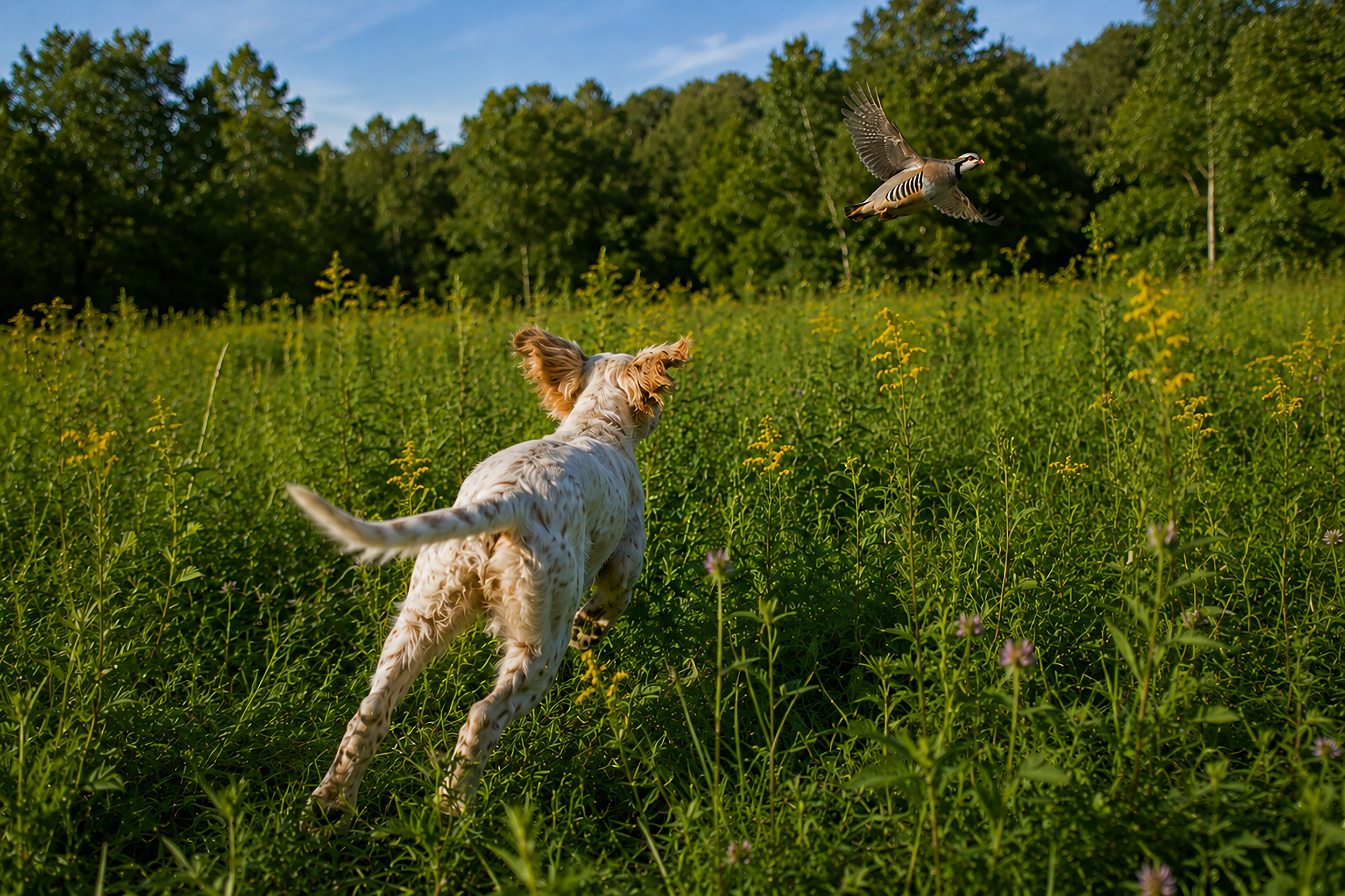
I started with three chukars. I allowed him to get a nose full of bird scent before releasing the birds and letting him chase.
The purpose was simple: get him excited about birds while allowing him to begin learning that he cannot catch them on his own. Eventually, he will understand that success comes from using his nose, trusting his instincts, and working with his hunting partner.
Phinnigan surprised me.
He did not just chase the birds with tremendous enthusiasm. After the initial excitement, he used his nose to locate the released birds again. Watching him work through the scent and find those birds was an unexpected and exciting moment.
The natural ability is clearly there, and his desire to find birds is beginning to come alive.
Phinnigaqn’s First Wild Bird
Not Quite the Perfect Gentleman
Does that mean Phinnigan is perfect?
Not exactly.
In the field, he is coming along beautifully. On the lead, however, we have been experiencing what I will politely call “technical difficulties.”
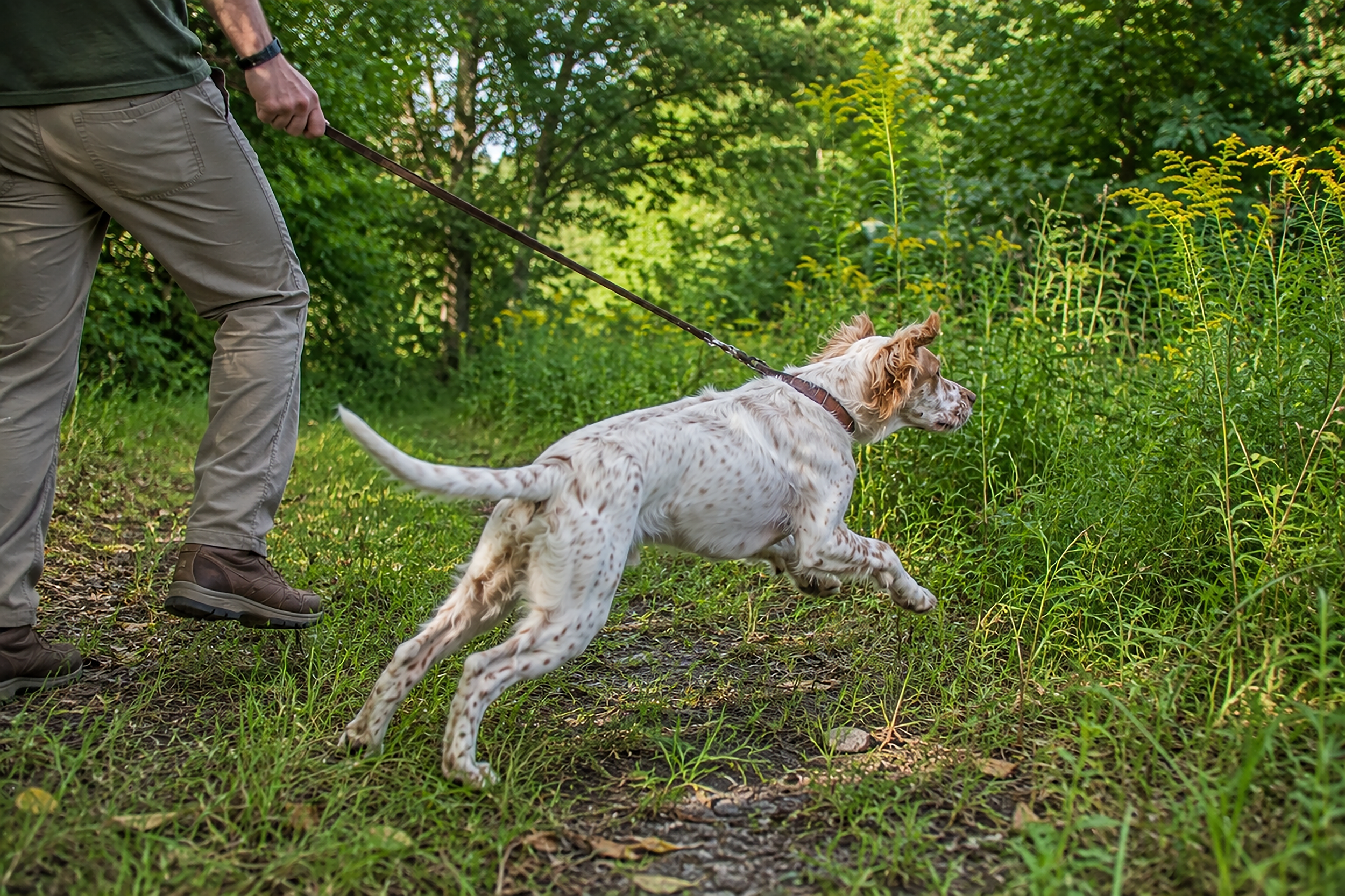
Phinnigan is a puller.
My standard lead and neck collar were not getting the job done. More importantly, I did not like watching him strain against the collar and put unnecessary pressure on his throat.
Naturally, I received plenty of advice and opinions, and we all know the saying about opinions.
I listened, applied a few filters, and considered where each recommendation came from. It is amazing how often people who have never trained a bird dog are among the first to explain exactly how it should be done.
Eventually, I received some useful advice from my veterinarian, who is also a well-respected dog trainer. He explained that my standard collar and lead were not the best tools for this particular problem and recommended a device called the Gentle Lead.
Discovering the Gentle Lead
Phinnigan was not impressed during our first attempt.
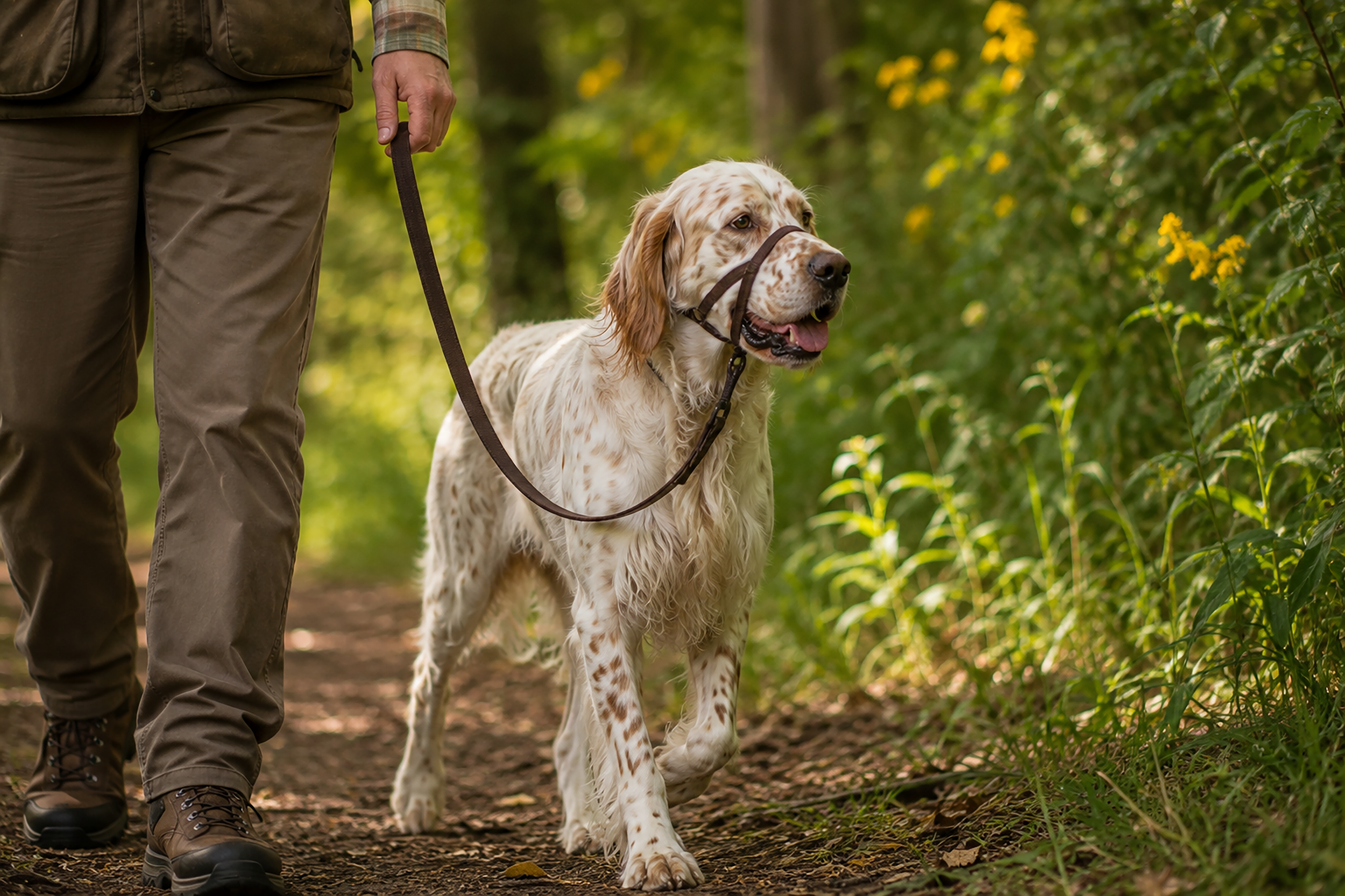
He pawed at the Gentle Lead and tried everything he could think of to remove the strap from around his nose. It took patience, repetition, and time for him to begin accepting it.
Once he did, the difference was remarkable.
He stopped pulling and straining against his throat. Instead, he began walking calmly beside me like the proper English gentleman I always knew he could be.
I am not sure whether the Gentle Lead will become a permanent part of our routine or remain a temporary training aid, but I can say that it has already been a game changer.
Phinnigan is beginning to understand that when the lead goes on, it is time to settle down and walk calmly beside me. When that lesson is finished, his reward is a full-out sprint and the freedom to wander through the woods.
He is learning that there is a time to behave and a time to run, and both are part of being a well-rounded bird dog.
One Bird and One Lesson at a Time
Tomorrow, we will play a little hide-and-seek with the chukars. I will allow Phinnigan to use his nose, search independently, and continue building his excitement for birds.
Once he is absolutely bird crazy, I will begin a slow and careful introduction to gunfire. We will start at a safe distance with a starter pistol, making sure the sound is always connected to the excitement and enjoyment of finding birds.
There is no reason to rush the process. Each new experience should build confidence rather than create uncertainty.
If everything continues moving in the right direction, Phinnigan and I should be at the preserve by September, hunting, learning, making mistakes, and enjoying our time together.
That is what this journey is really about.
I am not trying to create a finished bird dog overnight. I am building a hunting partner and companion, one walk, one bird, and one small lesson at a time.
My good friend Dez Young always told me, “Never, ever spoil your bird dog.”
Of course, Dez usually delivered that advice with a smile. It was more of a tongue-in-cheek expression than a strict training rule because, after a long day in the field, Dez spoiled his bird dogs as much as anyone.
He understood that a good bird dog needs structure, discipline, clear expectations, and consistent training. A dog must learn what he can do, what he cannot do, and when it is time to work. But Dez also understood that once the hunt was over, that hardworking bird dog had earned a comfortable place beside you.
I try to follow the same philosophy with Phinnigan.
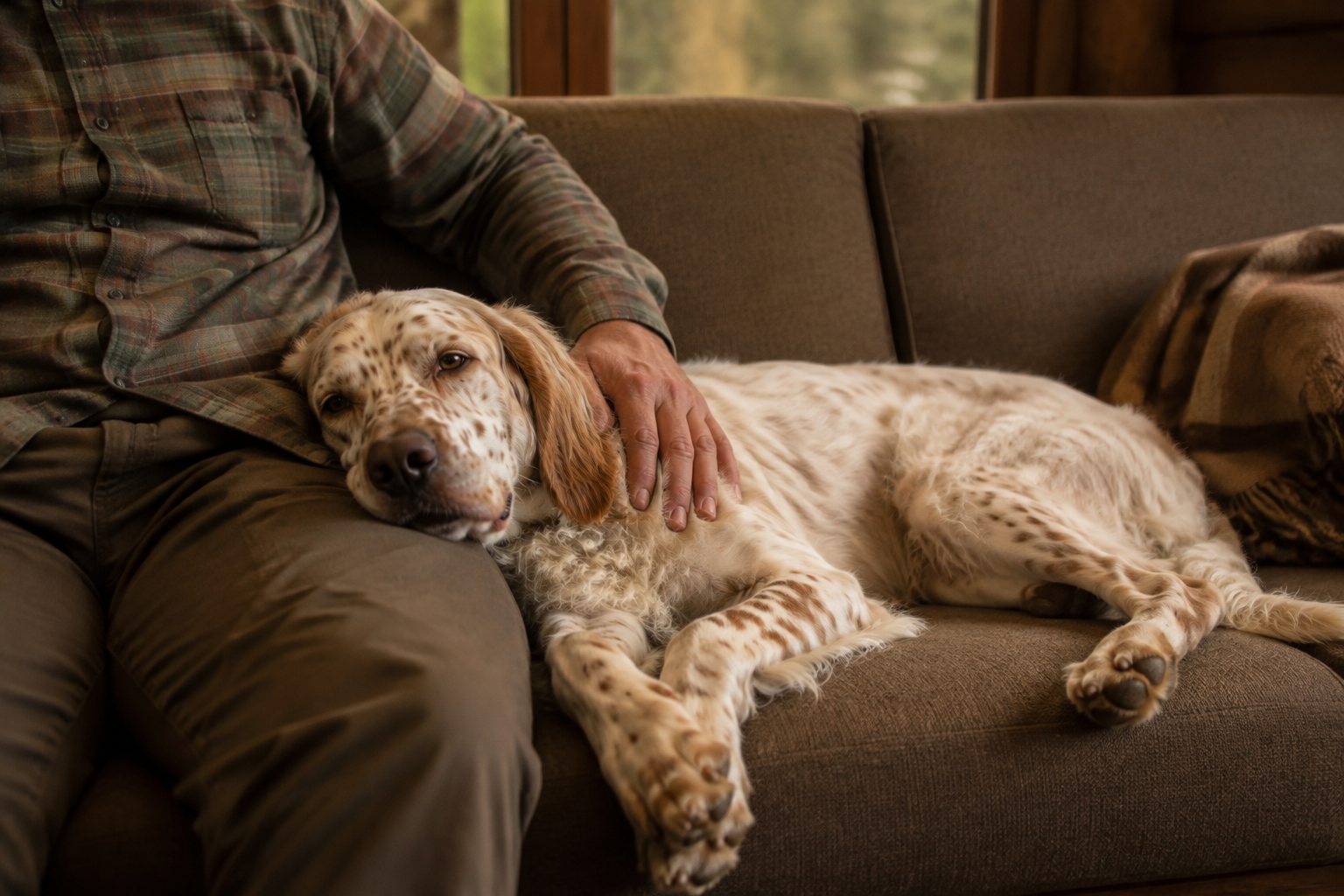
When we are training, I expect him to listen, learn, and work with me. But when the birds have been put away and we are home at the end of the day, Phinnigan usually finds his place beside me on the couch. He rests his head against my leg while I think about what went well, what we need to improve, and how far we have already come.
So, Dez, I promise I will do my best to never, ever spoil my bird dog, at least not until the day’s work is finished.
Phinnigan is becoming more than a dog I hope to hunt over. He is becoming my companion, my student, and my partner in the field. There will be plenty of mistakes and lessons ahead for both of us, but that is what makes the journey worthwhile.
One day, I hope we will look back on these early training sessions as the beginning of many memorable seasons together.
Until then, we will continue learning, one walk, one bird, and one small lesson at a time.
Where the Journey Matters as Much as the Catch, the Flush, or the Harvest.Where the Journey Matters as Much as the Catch, the Flush, or the Harvest.