The Sporting Traditions We Cannot Afford to Lose
There are outdoor traditions that everyone recognizes. Opening day of deer season. A spring morning in the turkey woods. Casting dry flies to rising trout. Walking behind a bird dog through October cover.
Then there are traditions that live quietly in certain corners of the country, practiced by small groups of sportsmen who understand the tides, the habitat and the history that make them possible.
Rail hunting in the salt marshes of South Jersey is one of those traditions.
Until recently, I knew very little about it. Rail birds had never been high on my hunting list, and I had never stood in one of the narrow cedar skiffs traditionally used to pursue them. That changed when my friends Tony, Dave and Eric invited me to join them for a September hunt.
What began as a new outdoor experience quickly became something more. It became a lesson in history, friendship and the importance of preserving the lesser-known sporting traditions that still connect us to the land and water.
Hunting by the Tide
Our day began with a short drive to southern New Jersey and breakfast at a local diner. The hunt was planned around a 2:30 afternoon high tide, because rail hunting does not begin when the hunter decides it should. It begins when the marsh allows it.
That is one of the first things that makes this pursuit different.
As the tide rises, water spreads across the marsh and pushes the birds from thick vegetation into areas where they can be flushed. Arrive too early and there may not be enough water to move through the marsh. Arrive too late and the opportunity can disappear with the falling tide.
The hunter must learn to work with the natural rhythm of the place.
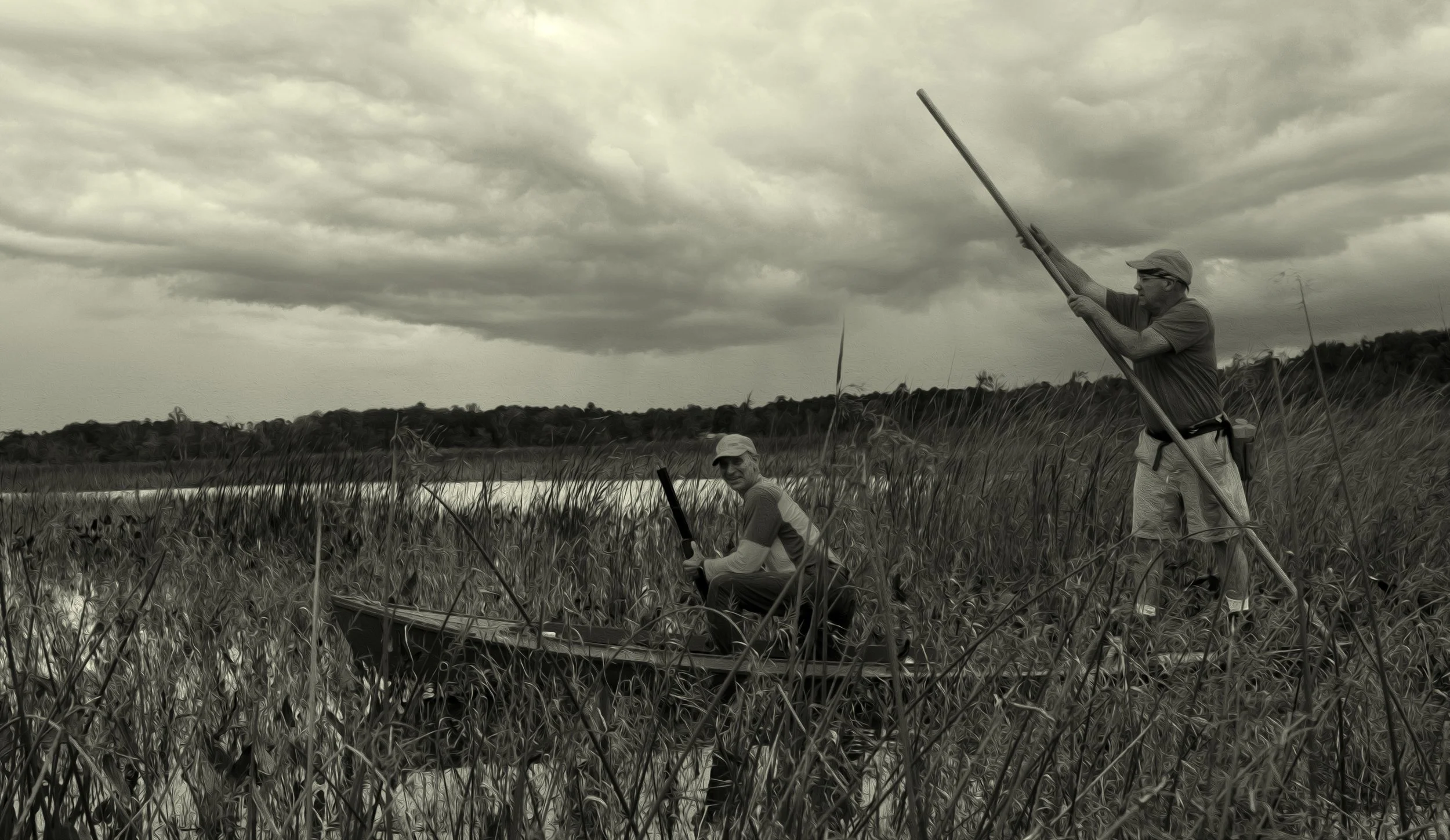
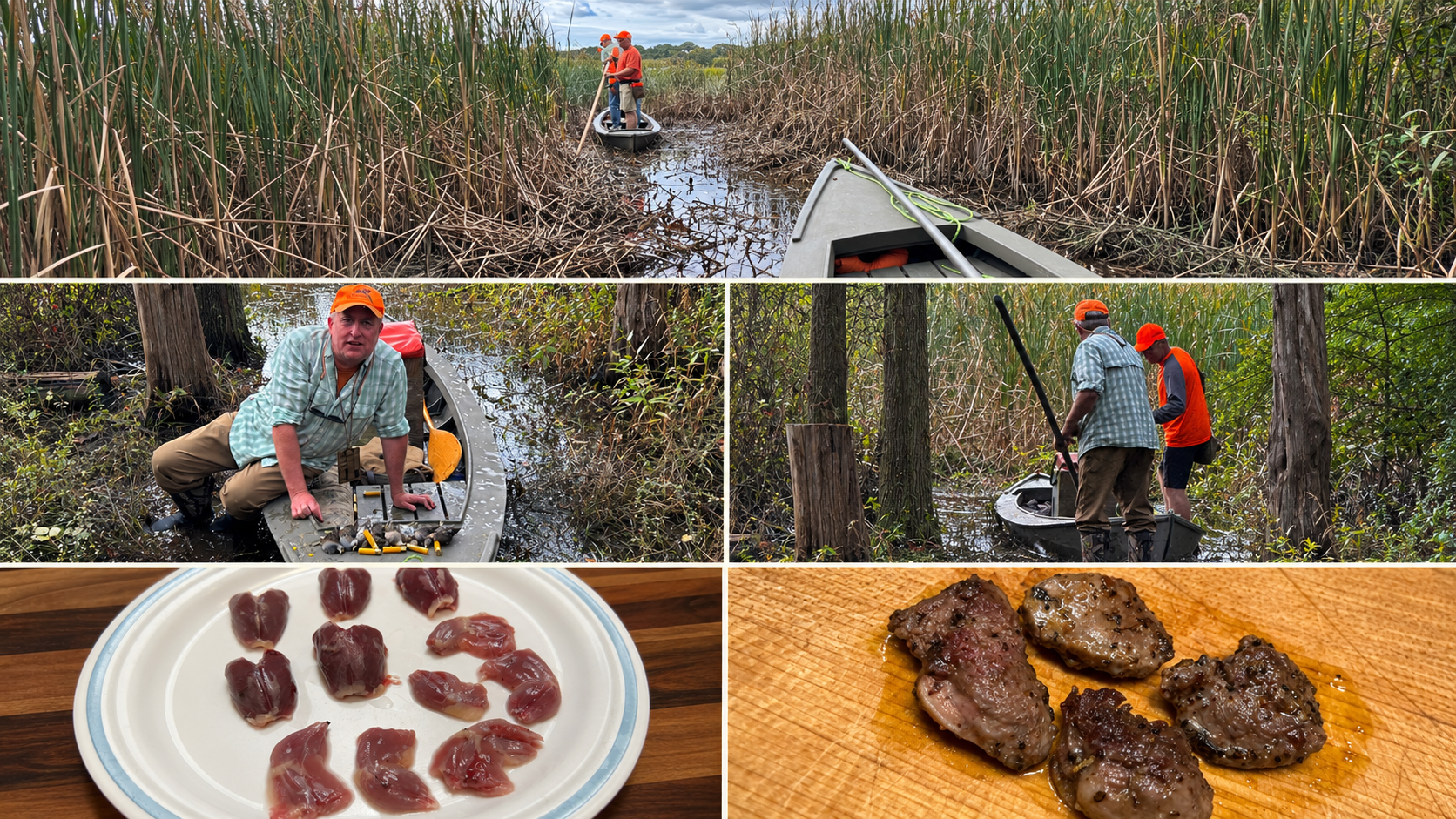
When we reached the launch, we waited until there was enough water beneath the boats. Then we pushed off into the salt marsh in traditional 12-foot cedar skiffs.
These boats are more than transportation. They are part of the hunt itself.
Long, narrow and light enough to move through shallow water, the skiffs are designed for marshes where a conventional boat would struggle. One person stands toward the stern and uses a long pole to guide the boat through the winding channels and flooded vegetation. The hunter stands in front, watching the cover and preparing for a rail to flush.
Standing in one for the first time requires a little faith.
The boat shifts beneath your feet. The marsh stretches out in every direction. There are no solid banks nearby, and every movement reminds you that balance matters. It took me a little while to become comfortable, but once I stopped fighting the boat and began moving with it, I understood why this method has survived for generations.
The cedar skiff, the push pole and the rising tide all belong together. Remove one piece, and the experience changes completely.
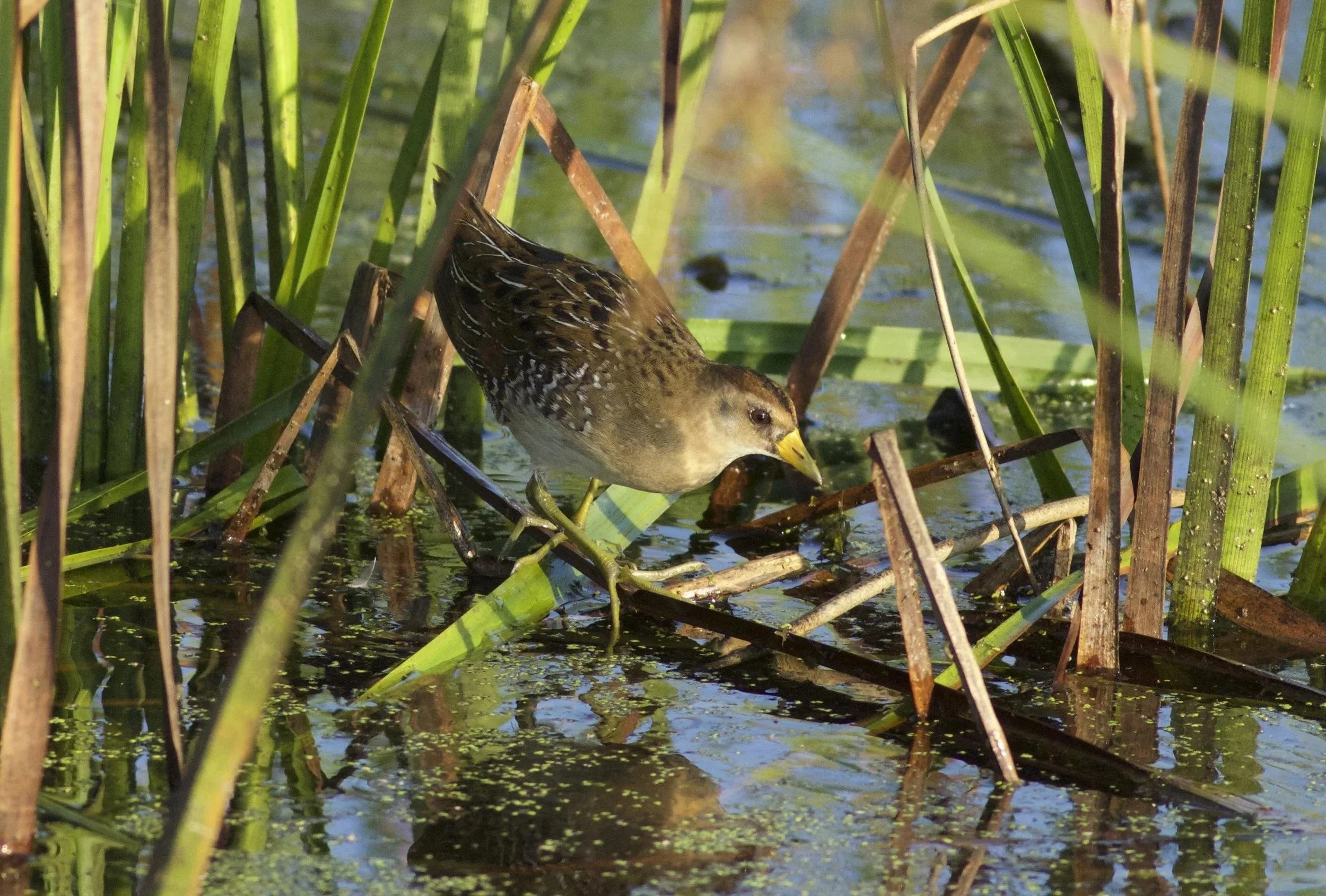
A Bird of the Marsh
We poled along a causeway before moving into thicker vegetation and the wild rice the rail birds favor. There was only one other group of hunters in the area, leaving most of the marsh quiet and open.
Before long, the tide reached the right height.
The first rail flushed without warning.
As an upland hunter, I am accustomed to birds climbing through trees or exploding from cover with a little height beneath them. Rails fly differently. They often stay low over the marsh, which makes safety and discipline especially important.
My first opportunity caught me by surprise. I was still adjusting to the boat and learning what to expect. But as the hunt continued, I began to understand the rhythm.
Pole forward. Watch the vegetation. Stay balanced. Be ready.
A rail would rise from the grass, fly low across the marsh and disappear almost as quickly as it had appeared. There was no time for a long setup or a carefully planned shot. Everything happened in a few seconds.
We hunted for nearly four hours and finished with ten birds—not bad for a first-timer.
But the number was not what stayed with me.
What stayed with me was the feeling of participating in something old.
More Than a Method
Outdoor traditions are often preserved through repetition. A father takes his son to the same deer camp. A grandfather teaches his granddaughter to tie a clinch knot. A bird hunter returns to the same coverts each October with another generation of dogs.
Rail hunting survives in much the same way.
The knowledge is passed from one person to another: how to read the tide, where the birds are likely to hold, how to pole a narrow skiff, how to remain balanced and how to take a safe shot at a low-flying bird.
None of that can be fully learned by reading a manual or watching a short video. It must be experienced in the marsh beside someone who already understands it.
That is what concerns me about some of our lesser-known sporting traditions. When only a small number of people continue to practice them, it does not take much for the chain to be broken.
A boat is no longer built. A launch is lost. A marsh is altered. An experienced hunter passes away before sharing what he knows. Young sportsmen never discover the opportunity existed.
Once that knowledge disappears, it is difficult, sometimes impossible, to recover.
Completing the Journey
When I returned home, I cleaned the birds, removed the breasts and fried them simply in butter with salt and pepper.
They were surprisingly tender and flavorful.
That meal completed the experience. The hunt did not end when we returned to the launch or unloaded the boats. It continued at the table, where the birds became part of the day’s story.
That connection, from the marsh to the hunt to the meal, is one of the reasons these traditions matter.
Responsible hunting teaches us that the harvest is not separate from the experience. It is part of a larger relationship with the habitat, the wildlife and the people who pass their knowledge along.
Our Responsibility to Remember
Not every sporting tradition will appeal to every sportsman. It does not have to.
The value of rail hunting is not determined by how many people participate in it. Its value comes from its connection to a particular landscape, a carefully learned method and generations of local knowledge.
If we want these traditions to survive, we must do more than quietly enjoy them.
We need to document them.
We need to photograph the boats, record the stories and explain why the tide matters. We need to introduce responsible newcomers and support the habitats that make these pursuits possible. Most importantly, we need to listen to the sportsmen who have carried the traditions forward.
My first South Jersey rail hunt was an adventure, but it was also a reminder.
The outdoor life is made up of more than the pursuits we already know. Beyond the familiar seasons are regional traditions shaped by rivers, mountains, prairies, forests and tidal marshes. Each one carries a piece of our sporting heritage.
Tony, Dave, Eric and I agreed that rail hunting should become our annual start to the hunting season.
I hope it does.
Some traditions survive because they are written into history books. Others survive because a few friends meet for breakfast, watch the tide and push an old cedar skiff into the marsh.
Those are the traditions we cannot afford to lose.