There are milestones in the life of every bird dog that stay with you.
The first time a puppy follows its nose into heavy cover. The first bird scent that changes the way it carries itself. The first real point. The first retrieve. And, of course, the first introduction to gunfire.
That last one deserves patience.
A young bird dog can have all the natural ability in the world, but confidence is still something we must protect. There is no reason to rush the process or push a dog simply because the calendar says hunting season is getting close. The dog will tell you when it is ready, if you are willing to pay attention.
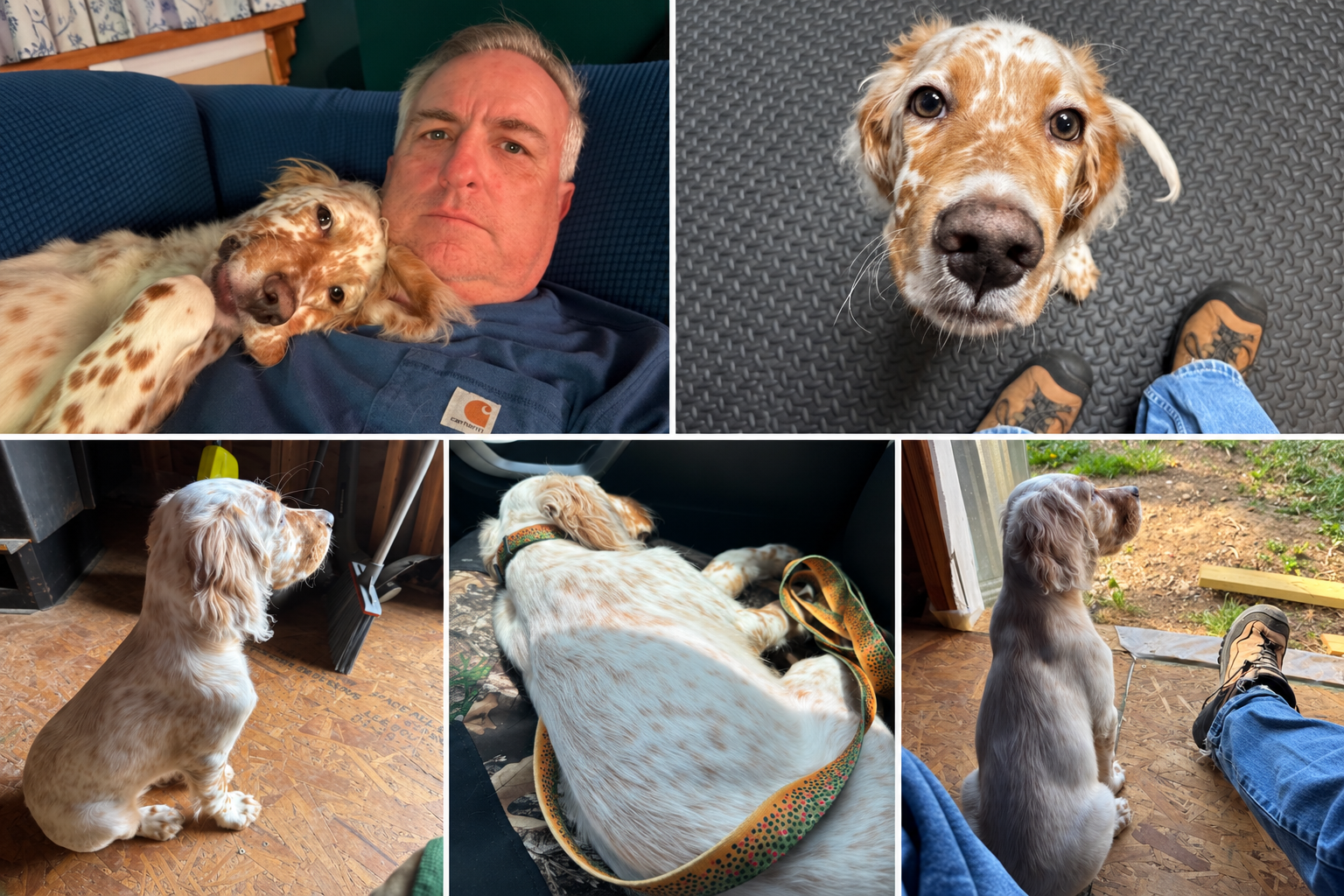
Recently, I loaded a box of quail into the truck and headed for the mountains with Phinnigan. The purpose of the trip was simple: give him another positive experience with birds and introduce him to the sound of a .22-caliber starter pistol.
It was an important day, but I did not want Phinnigan to feel any pressure from me. This was not a test he had to pass. It was simply another step in his development.
That difference matters.
Let the Birds Lead
From the moment Phinnigan realized birds were involved, his attention locked onto them. His nose, posture, and entire attitude changed. The playful puppy gave way to the beginning of a bird dog.
That natural excitement was exactly what I wanted to see.
The birds needed to remain the center of his world. The starter pistol was secondary, just another distant sound connected to something he already loved. There was no reason to make the gun the focus of the day.
When the time came for the first shot, I watched Phinnigan instead of watching the bird.
That may be the most important part of introducing any young dog to gunfire. You have to read the dog in front of you, not the dog described in a training book, not the dog you owned twenty years ago, and not the dog someone else trained.
Every dog is different.
A glance toward the sound, a hesitation, a lowered tail, or a change in pace can tell you it is time to slow down. Confidence can be built over many short, positive sessions, but it can be damaged in a single careless moment.
Phinnigan never seemed bothered by the starter pistol. He remained interested in the birds, chased with enthusiasm, and came back when I called. The sound did not replace his excitement or interrupt his focus.
That was enough for me.
There was no need to keep going simply because the first introduction had gone well. One of the hardest lessons in dog training is knowing when to stop. Success often tempts us to ask for more, but sometimes the best decision is to put the equipment away and allow the dog to leave the field wanting another bird.
Patience Is Part of the Training
We often measure a young bird dog by visible accomplishments: points held, birds found, retrieves completed, and commands obeyed. Those things matter, but they are only part of the story.
Trust is harder to measure.
Trust is built when a dog learns that the person beside it will not place it in a situation it cannot handle. It grows when pressure is applied carefully, expectations remain reasonable, and every outing ends with the dog’s confidence intact.
That does not mean avoiding discipline or structure. A bird dog needs boundaries, recall, and eventually the steadiness required to work safely and effectively in the field. But there is a time for every lesson.
With a puppy, desire must come first.
You cannot manufacture the kind of passion that makes a dog crash through alder runs, search the far edge of a grouse covert, or stay focused during a long day in difficult cover. You can encourage it, guide it, and eventually shape it, but first, you have to protect it.
That is why this first introduction was never really about the noise of the starter pistol.
It was about making sure Phinnigan continued to associate birds, cover, and time afield with excitement. It was about giving him a chance to succeed without placing unnecessary pressure on him. Most of all, it was about showing him that he could trust me to guide him at his pace.
Looking Toward the First Season
Phinnigan still has plenty to learn. So do I.
Every new bird dog reminds us that experience does not eliminate the need to pay attention. The lessons learned from Winston and Remington will always travel with me, but Phinnigan is his own dog. He deserves to be understood as an individual.
His first season will bring new cover, unfamiliar scent, wild birds, long rides, and moments neither of us can predict. There will be mistakes. There will be days when progress feels slow. There will probably be more than a few times when the puppy in him takes over.
That is all part of the journey.
For now, I am proud of the way he handled this important step. He stayed focused on the birds, showed no concern about the starter pistol, chased hard, and returned when called. More importantly, he left the mountain every bit as eager and confident as when we arrived.
That is the kind of progress worth celebrating.
The first shot in a young bird dog’s life should never be about proving how quickly the dog can be trained. It should be about creating a calm, positive experience and building the foundation for all the days to come.
Because long before a bird dog learns to trust the gun, it must first learn to trust the person carrying it.
The Wandering Sportsman
Where the journey matters as much as the catch, the flush, or the harvest.