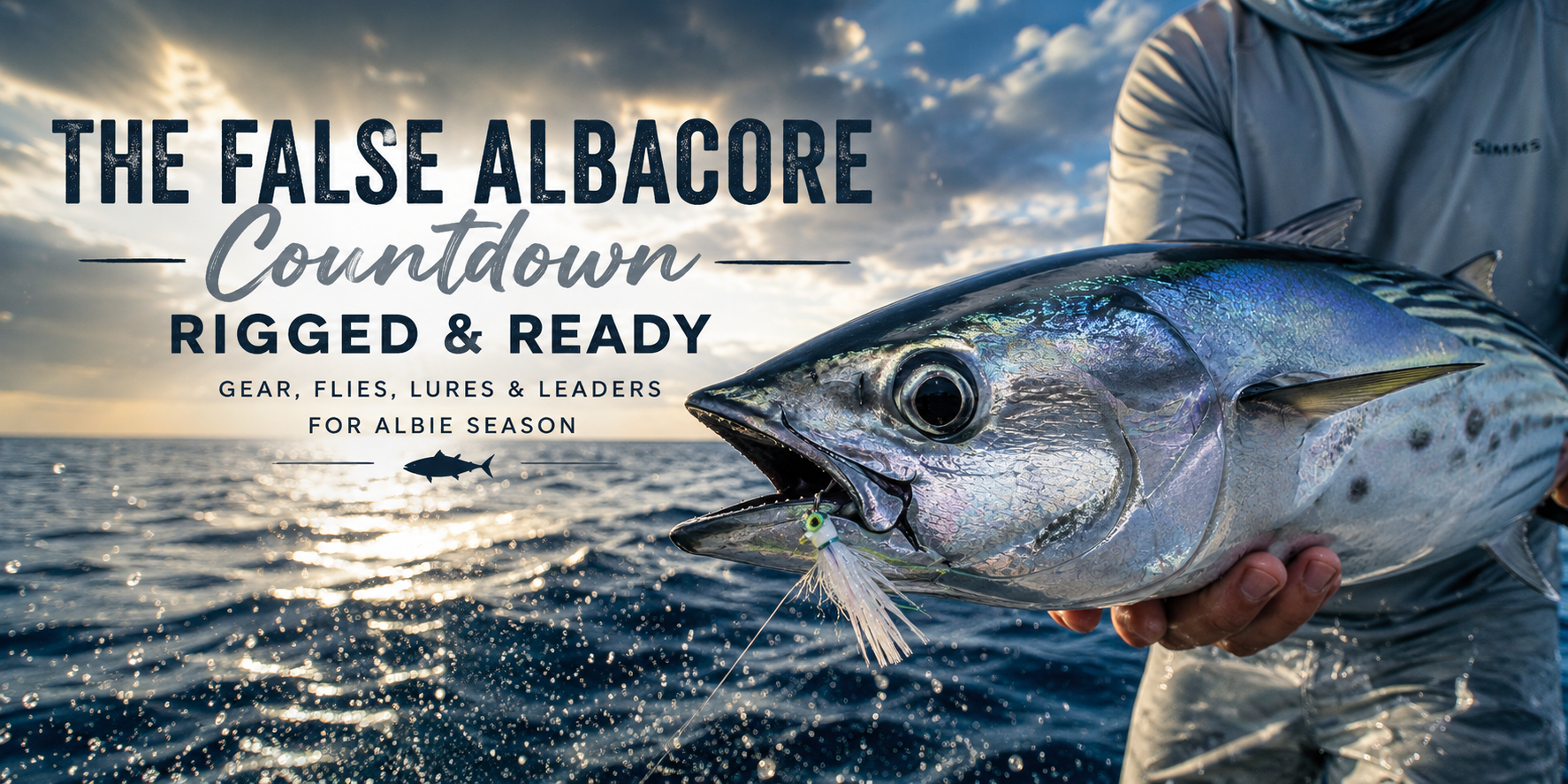
The False Albacore Countdown Part II: Rigged & Ready
Gear, Flies, Lures & Leaders for Success
In my last False Albacore Countdown, we talked about the anticipation of the season, the first reports, the gathering bait, the birds, and that unmistakable excitement that comes when you know the albies aren't far behind.
Now, let's continue our preparation for false albacore season with a more in-depth look at the gear, flies, lures, leaders, and little details that can help make your next outing a success.
There is a point every August when my thoughts begin drifting away from trout streams, summer bass, and warm evenings on the water toward something faster.
Much faster.
The first reports usually begin as rumors. A few fish spotted offshore. Bait beginning to gather. Someone sees birds working over nervous water. Then a photograph appears from somewhere farther south, and suddenly everyone who loves chasing false albacore starts paying attention.
The countdown has begun.
For me, false albacore season is one of the most anticipated times of the year. There is something about standing on the bow of a boat, rod in hand, scanning an enormous piece of water and waiting for it to erupt.
And when it does, everything changes in an instant.
Birds dive. Bait sprays across the surface. The captain pushes the throttle forward. Someone yells, "Ten o'clock!"
You make the cast.
The offering disappears.
The line comes tight.
And suddenly line is leaving the reel at a rate that reminds you exactly why you came.
Why Preparation Matters
False albacore aren't the biggest fish we chase, and they certainly aren't the rarest. But pound for pound, there are few fish that can match their combination of speed, power, unpredictability, and attitude.
They also demand something from the angler.
You need to be ready.
An albie blitz may last several minutes, or several seconds. There isn't always time to untangle a leader, search through a fly box, change a lure, or make three false casts before deciding where you want to put the fly.
When the opportunity appears, you have to make it count.
That's one of the reasons I enjoy this fishery so much. It rewards preparation.
And for me, that preparation begins long before the first fish arrives.
Gearing Up for False Albacore
One of the great things about chasing false albacore is that you don't have to be a fly angler to experience it.
Albies are an incredible target on both fly and light conventional tackle, and I like having both options rigged and ready.
There will be days when the fish stay up and give you beautiful opportunities with a fly rod. Other days they'll appear 70 yards away, disappear almost immediately, and pop up somewhere completely different thirty seconds later.
Versatility can make the difference.
Fly Fishing Gear
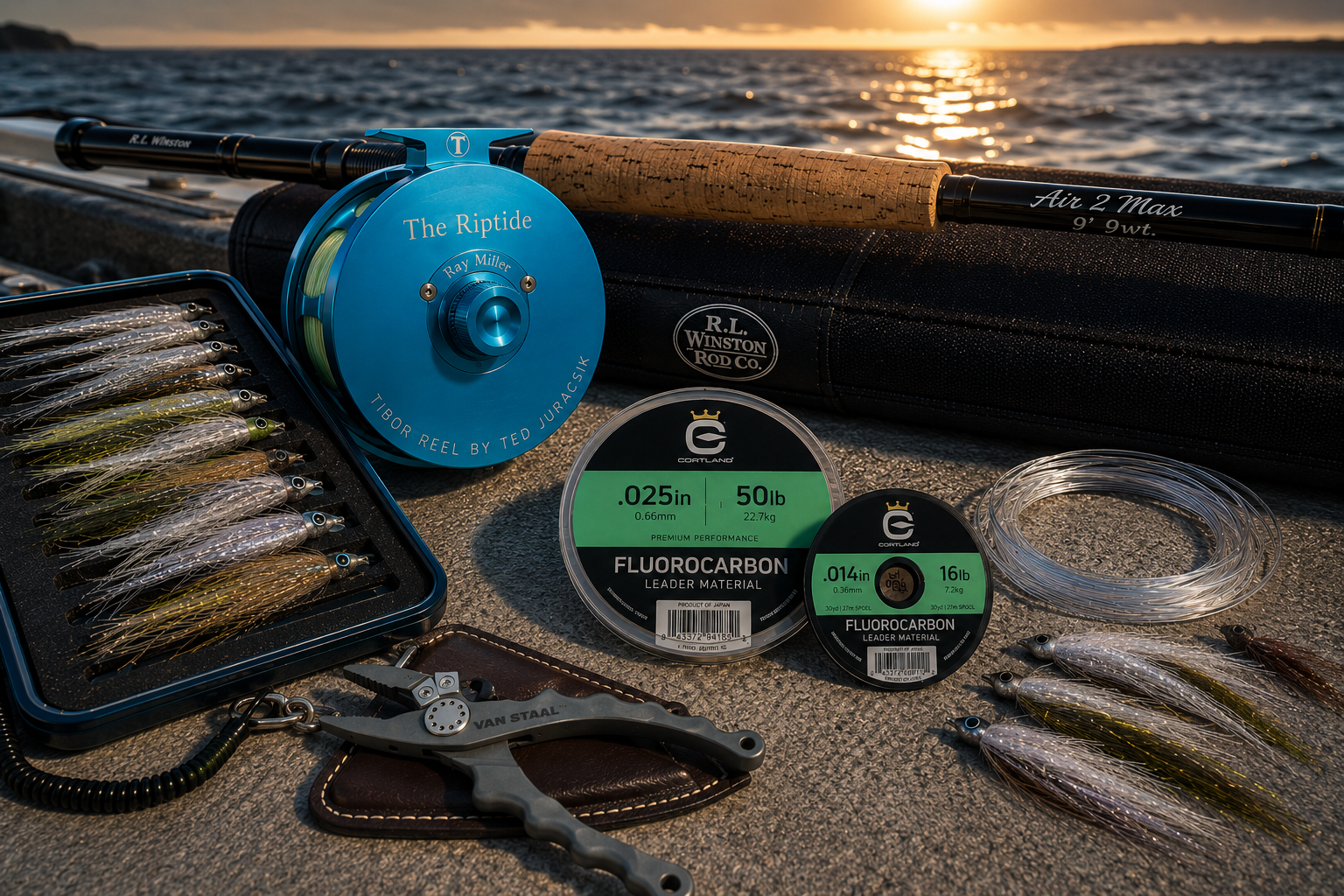
For fly fishing, my typical setup is an 8- or 9-weight fly rod paired with a quality saltwater reel with a smooth, dependable drag.
And don't overlook backing.
Lots of it.
The first time you hook a good false albacore and watch the fly line disappear through the guides followed by backing, you'll understand why.
A quality intermediate or floating saltwater line will cover many situations. Whenever possible, I also like having another outfit rigged with a different line or fly.
When fish suddenly appear, I don't want to be standing there changing tackle.
I want to be casting.
Leaders: Keep It Simple
I don't make albie leaders unnecessarily complicated.
A strong, well-constructed leader around 9 feet is generally where I start, adjusting length and tippet depending on water clarity, wind, bait size, and how selective the fish are.
Fluorocarbon is usually my choice for the business end.
More important than creating some elaborate leader formula is making sure every knot and connection is perfect.
False albacore have an uncanny ability to discover the weakest point in your tackle.
Before the season begins, I tie leaders, inspect connections, replace questionable knots, and make sure everything is ready.
Building the Fly Box
If there is one rule I've learned chasing albies, it's this:
Match the bait, not your favorite fly.
False albacore can be incredibly aggressive one minute and maddeningly selective the next.
My fly boxes usually contain a selection of:
Surf Candies
Clouser-style minnows
Small epoxy baitfish
Anchovy and silverside imitations
Peanut bunker patterns
Small flashy baitfish flies
A few larger patterns for bigger bait
White, olive, tan, silver, chartreuse, and combinations resembling the local forage all have their place.
But profile and size can be more important than color.
When albies are locked onto tiny bait, throwing something twice the size of what they're eating can result in cast after cast being ignored.
That's why I carry several sizes of the same general patterns.
Conventional Tackle
False albacore are equally exciting on light spinning tackle.
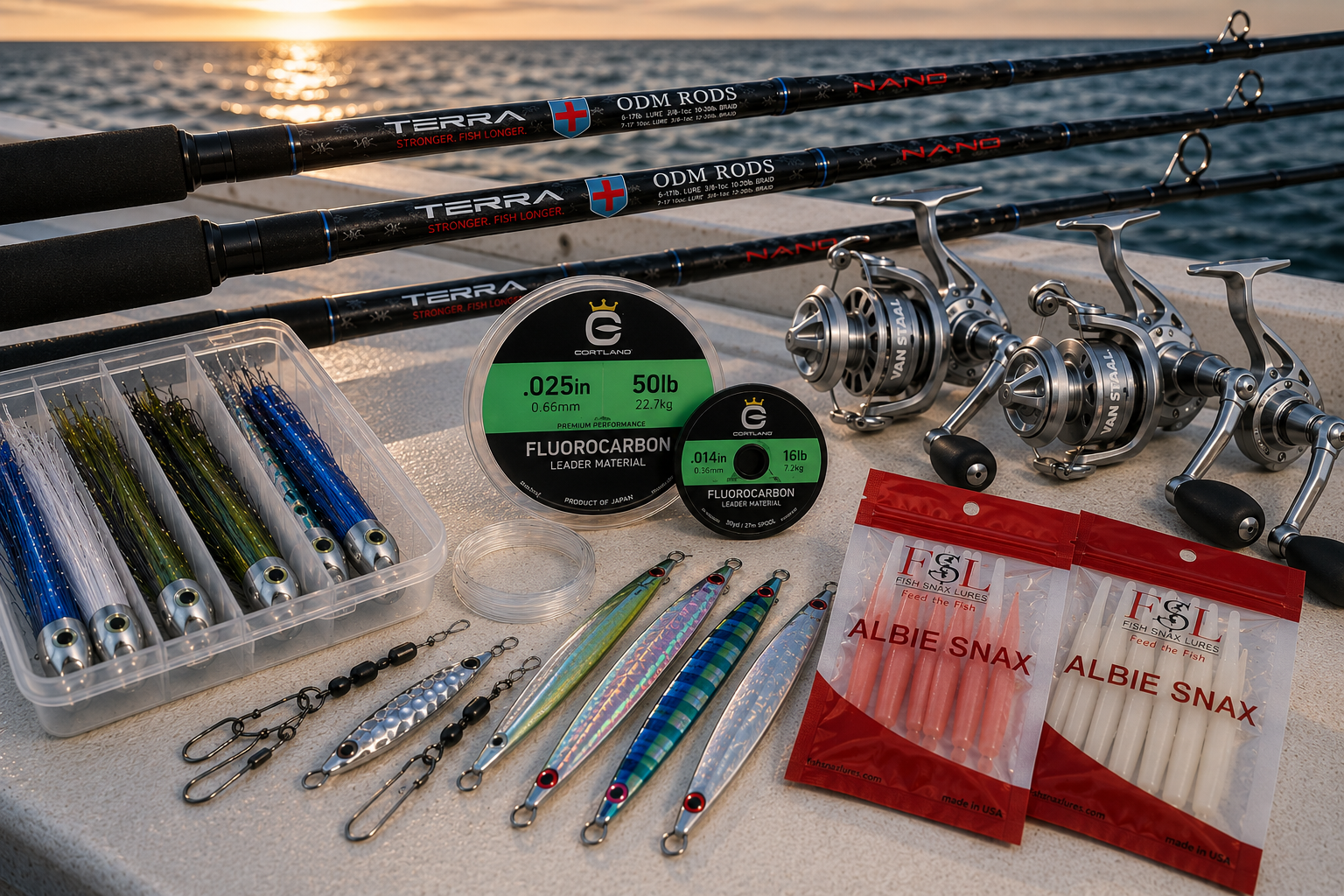
A 7- to 8-foot medium-light or medium-action spinning rod paired with a quality 3000 to 4000 size reel makes an excellent starting point.
Again, the drag matters.
These fish are capable of blistering first runs, and a smooth drag helps protect lighter leaders while allowing the fish to do what albies do best—run.
I prefer braided main line for its casting distance, sensitivity, and small diameter, finished with a fluorocarbon leader.
Depending on conditions and the size of the fish, 15- to 20-pound braid with a 15- to 25-pound fluorocarbon leadermakes a versatile combination.
Don't go unnecessarily heavy.
Part of the fun of albie fishing is experiencing their tremendous speed and power on appropriately matched tackle.
The Albie Snax
There are plenty of productive lures for false albacore, but if there is one that has earned a permanent place in my tackle bag, it's the Albie Snax.
For me, it has consistently been one of the most productive albie lures I've fished.
Its slender, natural profile does an excellent job of imitating the small baitfish albies frequently key on, and its soft construction gives it an action that can be difficult to duplicate with a hard lure.
It is also extremely versatile.
Cast it into breaking fish and retrieve it quickly across or just beneath the surface. Give it an erratic retrieve. Or allow it to sink before bringing it back through fish feeding deeper in the water column.
When albies become particularly selective, the subtle action and natural presentation of an Albie Snax can sometimes draw a strike when metal and harder-bodied offerings are being ignored.
It's one of those lures I want rigged and ready before the first school ever appears.
Other Conventional Favorites
Along with Albie Snax, my conventional box usually contains:
Small epoxy jigs
Slender metal tins
Small soft-plastic baitfish
Jigheads with small paddletails
Surface plugs and small pencils
A few slightly larger baitfish imitations
Silver, white, olive, and other natural baitfish colors are always good starting points.
Again, pay attention to the bait.
If the albies are keyed into tiny anchovies, silversides, peanut bunker, or another specific forage, try to match its approximate size and profile.
Sometimes downsizing your presentation can completely change the day.
Practice Before the Fish Arrive
This might be the most overlooked part of preparing for albie season.
Practice casting.
For fly anglers, don't simply practice casting far.
Practice making a quick, accurate 40- to 60-foot cast with as few false casts as possible.
Put a target in the yard and practice picking up the line, changing direction, and delivering the fly quickly.
Practice your double haul.
Practice casting into the wind.
And practice with the same rod, reel, and line you're actually going to fish.
Conventional anglers should practice too.
Learn how your different lures cast. Get comfortable making accurate casts from different angles and quickly picking up a lure to redirect toward moving fish.
When albies appear, you don't want to spend ten seconds preparing to cast.
You want to see the fish and make the shot.
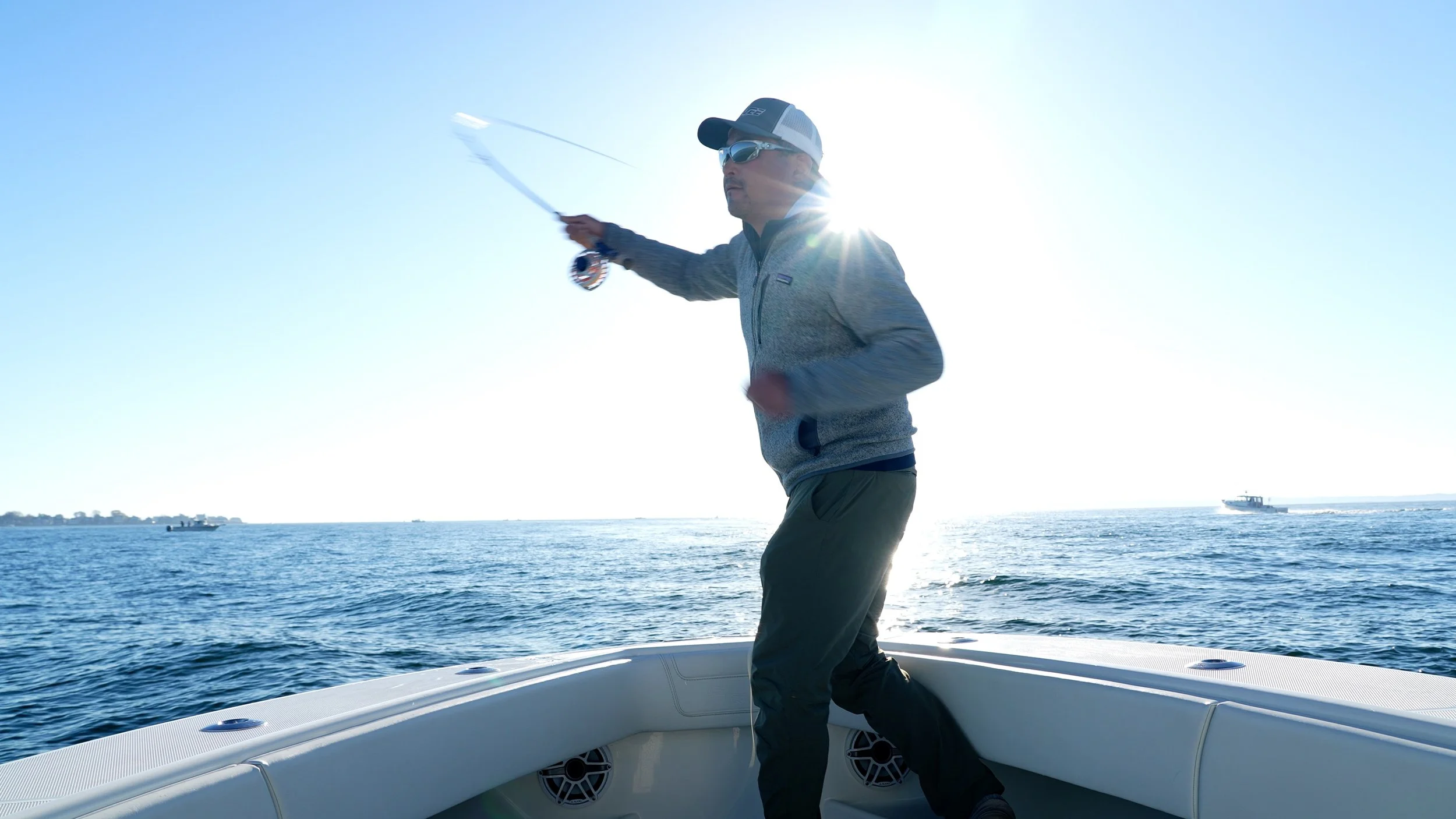
Anthony Loganzo
The Retrieve Matters
Making the cast is only half the equation.
Once your fly or lure lands, make it look alive.
False albacore are built to chase.
Fast, deliberate retrieves are often a good starting point, but don't become locked into one cadence.
Watch what the bait is doing.
Pay attention to how the fish are feeding.
Sometimes speed triggers the strike. Sometimes an erratic retrieve makes the difference. Other times the fish want something surprisingly subtle.
Fly anglers should also resist the trout angler's instinct to immediately lift the rod when a fish eats.
Strip-set.
Come tight with the line first.
Then hang on.
Preparing the Boat Bag
My albie bag isn't complicated, but everything inside has a purpose.
Extra leaders and tippet, spare flies and lures, clippers, pliers, stripping guards or tape, polarized glasses, sunscreen, rain gear, water, and a few basic tools all earn their place.
A stripping basket can also be invaluable depending on how and where you're fishing.
I also make sure everything is organized.
There is nothing worse than watching albies erupt beside the boat while you're digging through a tackle bag looking for a leader, lure, or pair of pliers.
The goal is simple:
When the fish appear, I don't want to be looking for something.
I want to be fishing.
Don't Chase Every Splash
This is something that comes with experience.
Albie fishing can create chaos.
A school erupts 100 yards away and everybody wants to race toward it. Then another appears behind the boat. Then one erupts off the bow.
Before long, you're chasing yesterday's fish.
Sometimes the better strategy is to slow down and watch.
Look at the birds.
Watch the bait.
Pay attention to the direction the fish are moving.
Try to anticipate where they're going to appear next instead of constantly racing toward where they were.
Some of my favorite albie moments have come from being patient, getting into position, and allowing the fish to come to us.
Have Both Ready
When I'm heading out specifically for albies, I like having a fly rod and spinning rod rigged before we ever leave the dock.
There will be days when the fish stay up long enough to make beautiful fly presentations.
Other times they're popping up at the edge of casting range for only a few seconds.
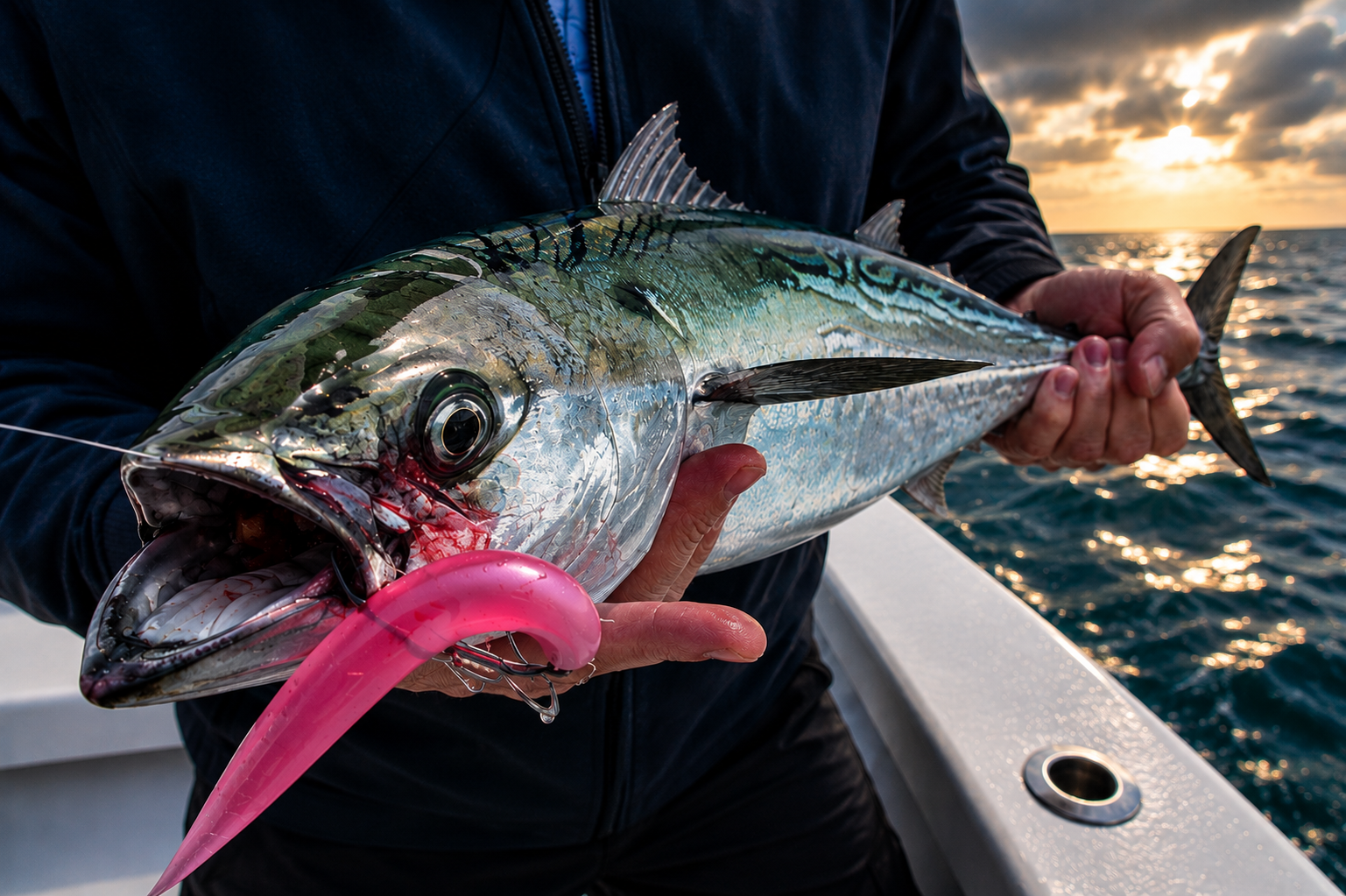
That's when picking up a spinning rod, especially one already rigged with an Albie Snax, can keep you in the game.
I've always believed there is room on the boat for both.
Whether you're holding a fly rod or spinning rod, we're chasing the same fish, watching the same birds, looking for the same nervous water, and waiting for that same explosion of bait.
We're all fishermen.
And when an albie eats and starts peeling line from the reel, it doesn't matter very much how you delivered the offering.
Just hang on.
Respect the Fish
False albacore are incredible athletes, and they deserve careful handling.
Keep them in the water whenever possible. Have the camera ready before lifting a fish. Support it properly, take the photograph quickly, and get it back into the water.
After a hard fight, give the fish the time it needs to recover.
A fish that gave you everything it had deserves the opportunity to swim away strong.
Watching an albie kick free and disappear back into blue water is one of my favorite parts of the entire experience.
The Season Ahead
That's what makes this time of August so exciting.
Right now, much of the preparation happens in the garage, at the tying bench, or standing in the yard with a rod.
But soon I'll be looking toward open water.
I'll be watching the bait, the birds, the weather, and those first reports that tell us the season is beginning to come alive.
Soon enough, the rods will be rigged.
The fly boxes will be filled.
The Albie Snax will be ready.
The leaders will be tied.
And somewhere out there, a patch of perfectly calm water is going to suddenly explode.
When it happens, I want to be ready.
Because false albacore season doesn't wait for anyone.
The countdown has begun.
Where the Journey Matters as Much as the Catch, the Flush, or the Harvest.
Anthony Loganzo