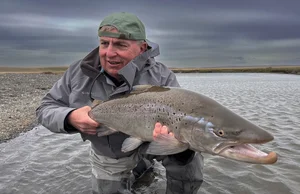
Winter Steelhead on The Great Lakes, The Fish That Started It All
I still remember my first winter steelhead trip as if it were yesterday. It was the mid 1990s, and I was a complete rookie at the steelhead game, the kind of rookie who didn’t yet know what he didn’t know. The weather was downright frosty, with snowflakes so big it felt like they were falling straight out of the sky and landing on your shoulders whole.
That morning began with a hard lesson in commitment. Back then, steelheading the Lake Ontario tributaries meant early, something like a 4:00 a.m. start. If you weren’t on the river at daybreak, you risked losing your spot to someone more eager, more seasoned, or just more desperate to be there, and too our surprise we had the whole run to ourselves. Those were the days when you earned water with effort, not convenience.
Thankfully, Pulaski was an all-night affair back then. We grabbed a cup of hot coffee, a quick breakfast, and headed off into the dark, hoping, not knowing, that our chosen run would still be open when we arrived.
It was cold. The kind of cold that settles into your bones. And as a beginner, I didn’t yet understand that winter steelhead don’t exactly come alive at first light. These fish needed time. The water needed to warm just a touch. But that didn’t stop us. We stood there in the dark, breath hanging in the air, until the first thin ribbon of sunlight touched the water. Then, almost on cue, everyone stepped in and began their quiet assault on the run.
Hours passed. Nothing happened.
Finally, around 10:00 a.m., my friend and mentor hooked up and landed a solid steelhead. Then another. After a couple of fish, he must have decided it was time to help the rookie. He waved me over, standing squarely in what I would later understand was the honey hole. He showed me how to mend my line, how to slow everything down, how to get the fly down where the fish were actually lying.
I made the cast, adjusted my drift, and then, bam, my indicator jolted upstream.
I was on.
What followed was unlike anything I had ever felt. Until then, most of my fishing had been for small trout in the Pocono Mountains. This was different. This fish screamed line and tore downstream, and all I could do was hang on and hope things would end well. At one point, a steelhead launched itself into the air upstream and I yelled, “Wow! Did you see that fish?”
Yes. That was my fish.
Like I said, I was a rookie.
After a long, heart-pounding battle, I started to feel like I was gaining the upper hand. My buddy said, “That’s great, Ray. Not many people land their first steelhead, most break them off.”
He spoke too soon.
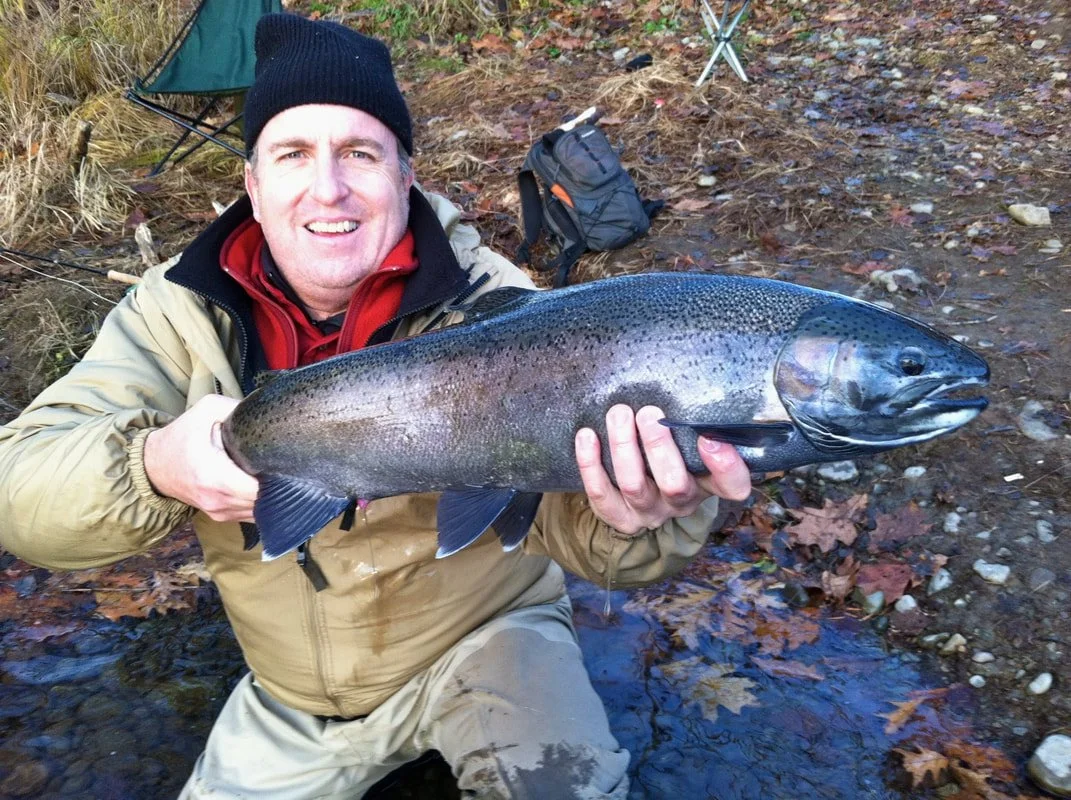
Another friend was fishing just upstream when my steelhead made one last desperate run, straight between his legs. I heard a sharp pop and felt that sickening pause, certain my first steelhead was gone. But I was wrong. In a move that still makes me smile, my buddy, being the fisherman he is, somehow managed to scoop the fish into his net after the break-off. Because of him, I got a brief look, a quick photo, and watched that steelhead slide back into the current to live another day. I owe him for that moment to this day.
I’ll never forget her, long, bright, and powerful, an impressive fish burned permanently into my memory. At the time, I was disappointed, sure. It wasn’t the way I imagined my first steelhead would end. But that moment lit a fire. That near-miss sparked a steelhead fever that has never left me.
Over the years, I eventually got my act together. I learned how to read winter water, how to slow my presentations, how to dress for the conditions, and, most importantly, how to be patient. I caught steelhead. Some big ones. Some memorable ones. But that first fish, the one that nearly slipped away, was both a lesson and an inspiration. It taught me that steelhead aren’t given; they’re earned, and that sometimes the fish you almost lose leave the deepest mark.
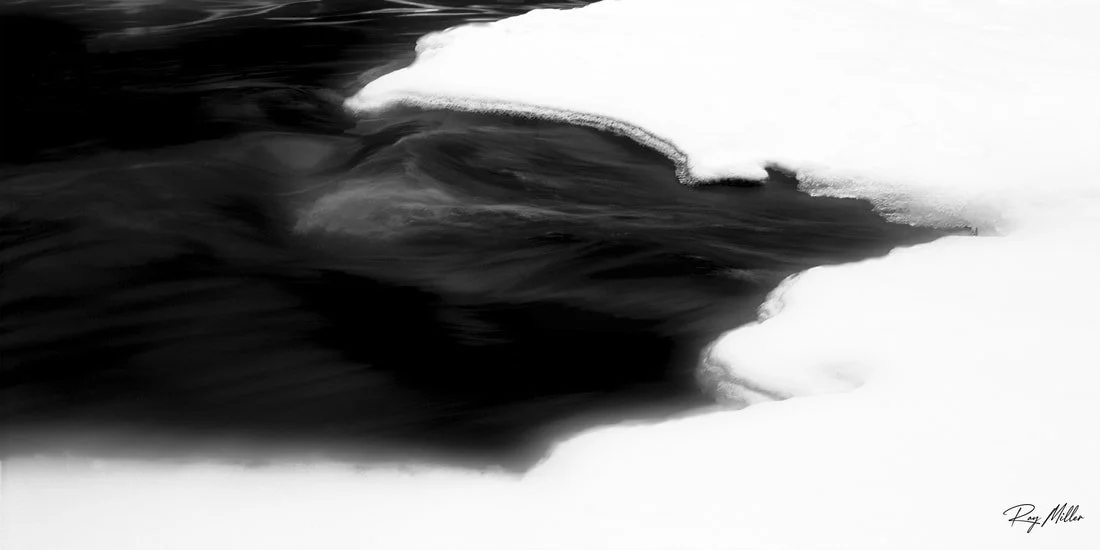
That’s the thing about winter steelheading. There’s a particular kind of quiet that settles in along the Lake Ontario tributaries once winter takes hold. Snow softens the banks, anchor ice clings to the edges, and the crowds thin to a handful of committed anglers who understand that some of the finest steelhead fishing of the year happens when most rods are put away.
Winter steelheading isn’t about comfort or convenience. It’s about timing, patience, and embracing conditions that demand your full attention. When it comes together, when a bright fish slides into the net against a backdrop of snow and steam rising off cold water. there are few experiences in freshwater fishing that compare.
Cold weather concentrates fish into predictable holding water: deeper runs, soft seams, and walking-pace tailouts where steelhead can conserve energy. These fish aren’t scattered, they’re grouped, and when you find them, action can be surprisingly steady. Cold water slows everything down. Fish move less, spook less, and commit more deliberately, rewarding anglers who fish methodically and stay connected longer.
Reading winter water means slowing down, mentally and physically. Depth and softness matter. Structure matters. Tailouts matter. Presentation matters more than distance. A short, controlled drift that keeps your offering in the strike zone will always out-fish covering water quickly.
Tackle follows the same rule. Winter favors simplicity and control, light leaders, sensitive indicators, properly weighted rigs. Whether you’re drifting beads, nymphs, or small egg patterns, the goal is a natural drift near the bottom at the speed of the current. Fly anglers often rely on longer leaders and heavier flies; spinning anglers find equal success with float rigs that allow precise depth control.
Cold, wet conditions are part of the deal. Dressing properly, layers, insulated boots, good gloves, and a thermos, keeps you focused. And focused anglers catch more fish. Safety matters too. Icy banks and shelf ice demand respect with every step.
One of winter’s greatest gifts is solitude. On tributaries that bustle in October, you may share miles of river with only a few like-minded anglers in January. Conversations are brief. Nods are respectful. Everyone understands the unspoken agreement: we’re here because this matters to us.
Whether you’re fishing classic runs on the Salmon River, quieter creeks feeding Lake Ontario, or winter water near the Niagara River, the experience is defined as much by atmosphere as by fish.
Decades later, the pull of winter water, snow-covered banks, and the promise of a steelhead still feels just as strong as it did that day. Some fish you land. Others land on you, and change you forever.