The Great Dog Training Debate: What Kind of Bird Dog Do You Really Want?
Few subjects create more debate among bird hunters than dog training.
Mention e-collars, whoa posts, force fetch, field trials, or professional trainers around a campfire and you're likely to get as many opinions as there are hunters sitting around it.
Over the years I've learned something about bird dogs.
Most of those arguments miss the point.
Before you ever pick up a training book, watch a video, or send a dog to a trainer, you should ask yourself one simple question:
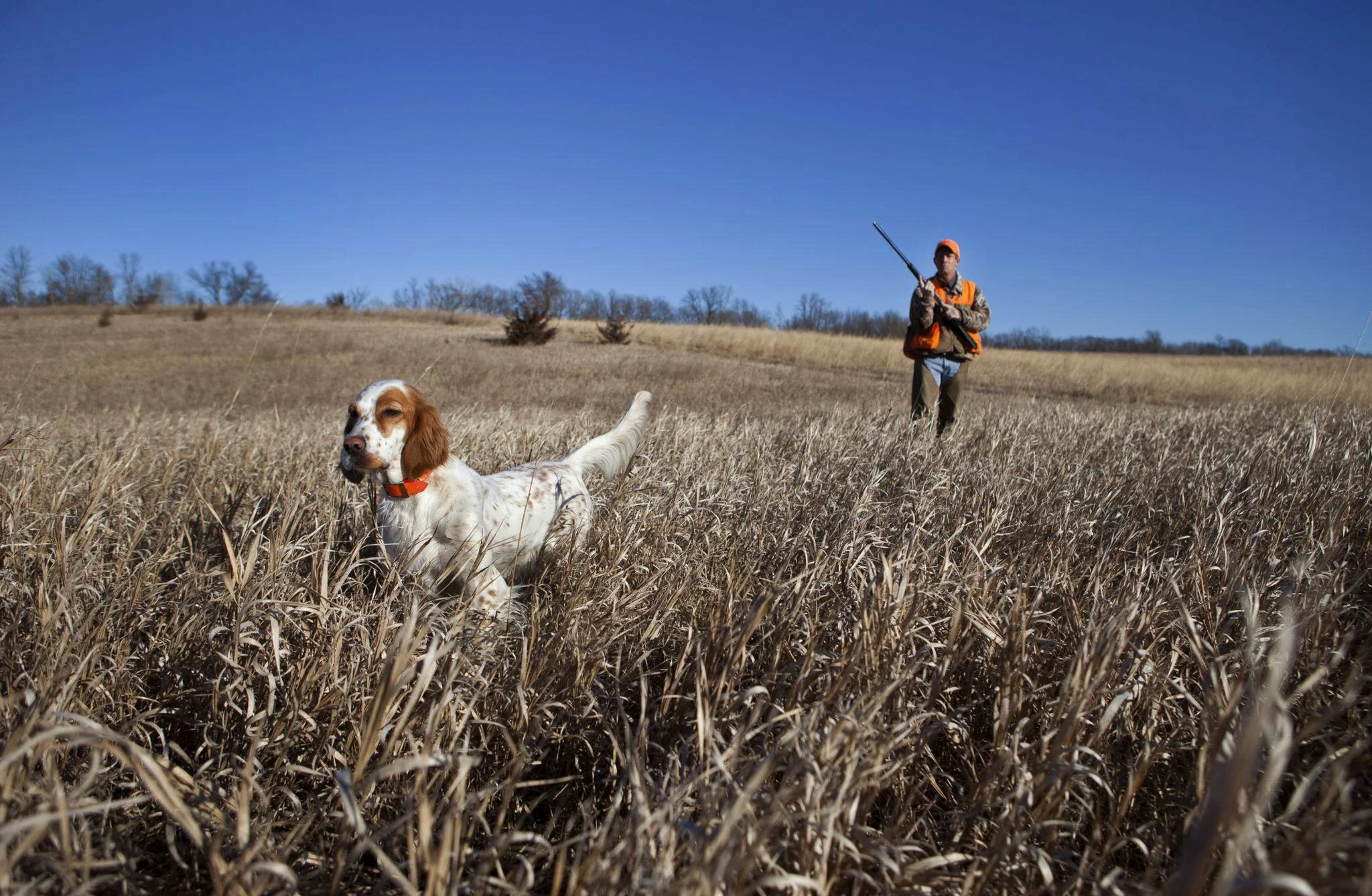
Lessons passed down through generations of hunters and dog men.
What do you want your dog to become?
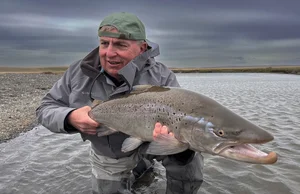
I often tell my fishing clients the same thing when they're shopping for a fly rod.
Everyone wants to know which rod is best.
The answer is always the same.
Best for what?
A small mountain stream requires different tools than chasing tarpon on a tropical flat. Neither rod is wrong. They're simply designed for different purposes.
Bird dogs are no different.
If you're a professional guide who spends every day putting clients on birds, your expectations are going to be different than someone who hunts grouse a few weekends every fall.
If you compete in field trials, you'll likely demand a different level of precision than the hunter who simply wants a loyal companion to share the outdoors with.
The destination determines the path.
There is no question that some of the finest dog trainers in the world are producing incredible dogs.
Men like Ronnie Smith and Richard Weaver have forgotten more about bird dogs than most of us will ever know. I've had the privilege of watching Richard work dogs and hunting over his Ryman-type English Setters. The level of consistency, control, and performance is impressive.
It's easy to see why people invest significant money in professional training.
For many owners, it makes perfect sense.
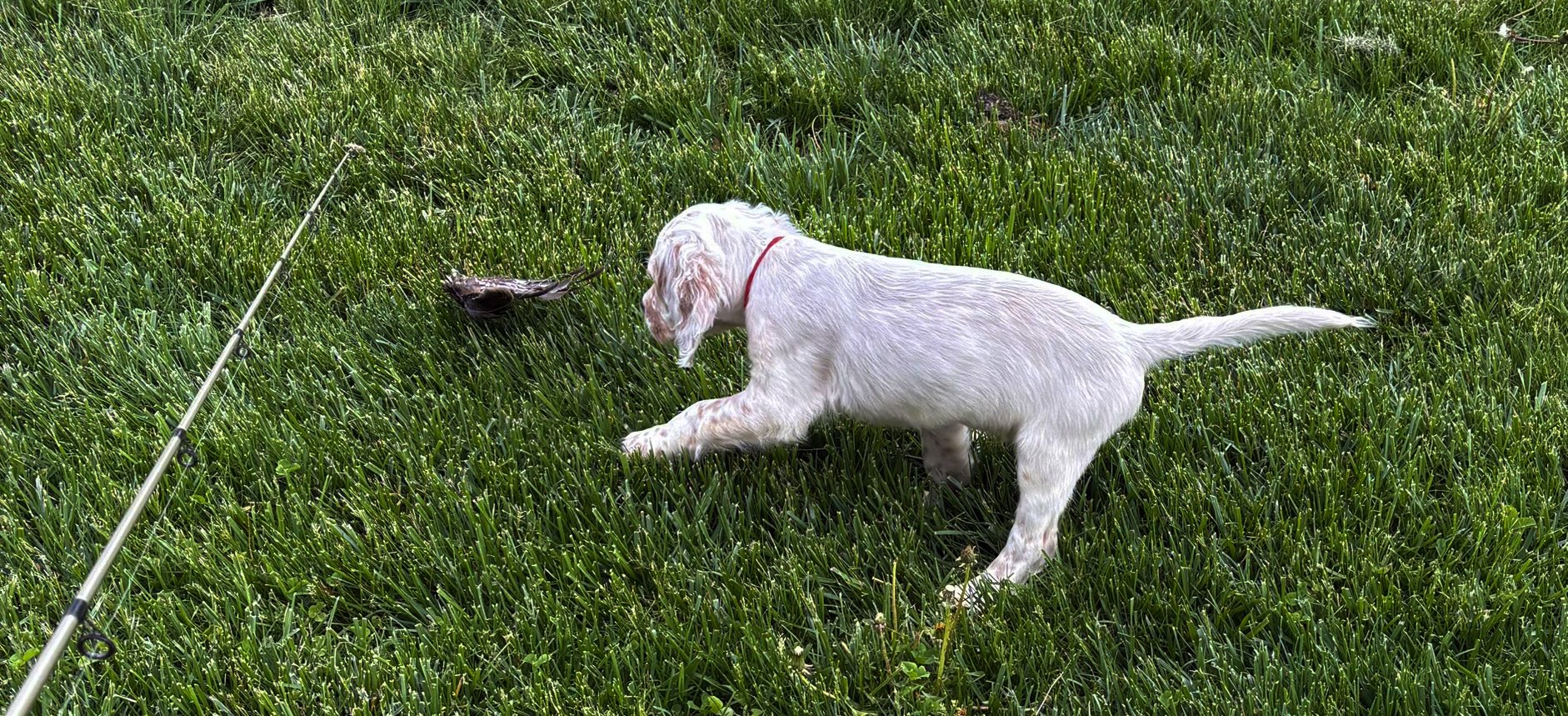
Every great bird dog starts with curiosity, not perfection.
One individual who greatly influenced my thinking was Ben O. Williams.
To many people, Ben was one of the finest upland hunting writers and dog men of his generation. To me, he was much more than that. He was someone I had the privilege to hunt with, spend time around, and film for my video Hunting Huns on the High Prairie.
Like many hunters, I expected Ben to have complicated answers to complicated questions. After all, here was a man who had spent a lifetime hunting behind bird dogs, writing about bird dogs, and helping others understand them.
What I found instead was a man who had an incredible ability to simplify things.
Ben wasn't interested in making bird hunting more complicated than it needed to be.
He wasn't interested in impressing people with training jargon or endless theories.
He believed in good dogs, good birds, good country, and good company.
During our time together on the high prairie, I watched him interact with both dogs and people. There was a quiet confidence about him. He didn't need to prove anything because a lifetime in the field had already done that.
One evening after filming, we sat down for an interview. I asked Ben what I thought would be a complicated question.
"What do you look for when selecting your next hunting dog?"
I was prepared for a lengthy discussion about bloodlines, temperament tests, conformation, puppy evaluations, training methods, and all the other things people love to debate.
Instead, Ben looked at me and said:
"I look at the parents."
That was it.
Seeing my puzzled expression, he elaborated slightly.
"Pick the right parents and the instincts are already there."
To Ben, selecting a bird dog wasn't about finding some hidden secret. It wasn't about overthinking every detail. It was about trusting generations of breeding and selecting dogs from proven stock.
I remember sitting there almost disappointed because I had planned an entire segment around puppy selection. In my mind, Ben was supposed to give me twenty minutes of insight.
Instead, he gave me about twenty seconds.
The funny thing is, all these years later, I probably remember those twenty seconds more clearly than most of the longer interviews I've conducted.
That's because there was wisdom in its simplicity.
Ben understood something that many of us eventually learn.
You can train a dog.
You can guide a dog.
You can help a dog reach its potential.
But you cannot train instinct into a dog that doesn't possess it.
The best bird dogs carry something inside them that no trainer can create. The desire to hunt. The desire to find birds. The willingness to work with their owner. Those qualities are rooted in genetics and generations of careful breeding.
Of course, Ben knew training was important. He spent enough years around bird dogs to appreciate that. But he also knew that training is often easier when you're starting with the right material.
Looking back, I realize Ben's answer wasn't really about selecting a puppy at all.
It was about trust.
Trusting proven bloodlines.
Trusting instinct.
Trusting the dog.
And perhaps most importantly, trusting that sometimes we don't need to make things more complicated than they really are.
Of course, we eventually had to find a way to fill the time I thought we'd spend discussing puppy selection. We solved that problem the best way a couple of bird hunters could.
By filming Ben cooking Hungarian partridge off the tailgate of his truck.
In hindsight, that probably captured who Ben was better than any interview ever could.
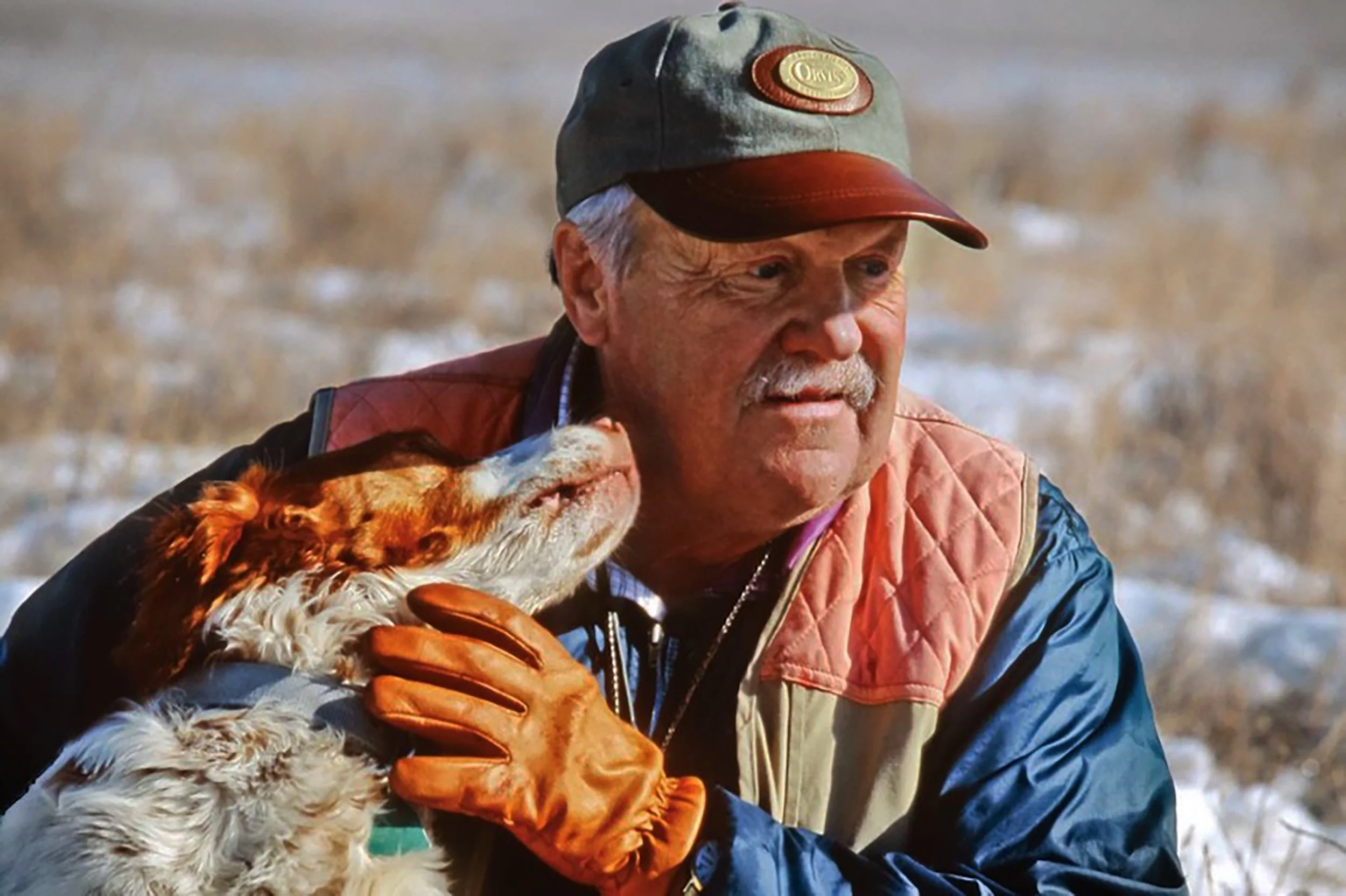
"Pick the right parents and most of the rest is already there."
Another influence on me was Dez Young.
Like many upland hunters, I grew up watching Hunting with Hank and Dash in the Uplands. Looking back, those shows may have played a bigger role in shaping my outlook on bird hunting than I realized at the time.
What drew me to those shows wasn't perfect dog work.
It wasn't advanced training techniques.
It wasn't discussions about bloodlines or field trial championships.
It was the relationship.
Dez wasn't trying to impress anyone. He wasn't trying to convince viewers that he had the most polished dog in the country. He was simply sharing his adventures with a hunting companion he loved.
Hank wasn't famous because he was flawless.
He was famous because he represented something every bird hunter could understand.
A dog that loved birds.
A dog that loved being outdoors.
A dog that loved his owner.
When you watched Dez and Hank together, you could see the bond between them. Hank wasn't just another hunting dog. He was a member of the family, a trusted companion, and a partner in every adventure. Whether they were chasing prairie grouse, Hungarian partridge, or pheasants, the story was never really about the birds.
The story was about the journey.
The hunts felt real because they were real. There were misses, mistakes, difficult conditions, and days when things didn't go according to plan. Yet somehow those episodes always left you wanting to grab your shotgun, load up your dog, and head for the nearest cover.
I think that's because Dez understood something that many of us eventually learn.
The birds are important.
The shooting is important.
But what we remember years later are the dogs.
We remember the look in their eyes when the tailgate drops.
We remember their first point.
We remember the long drives, the motel rooms, the campfires, and the quiet moments when a tired dog curls up beside us after a day afield.
Those are the memories that stay with us.
Watching Dez and Hank helped me understand that a bird dog doesn't have to be perfect to be special. Sometimes the best dogs are simply the ones that share the journey with us.
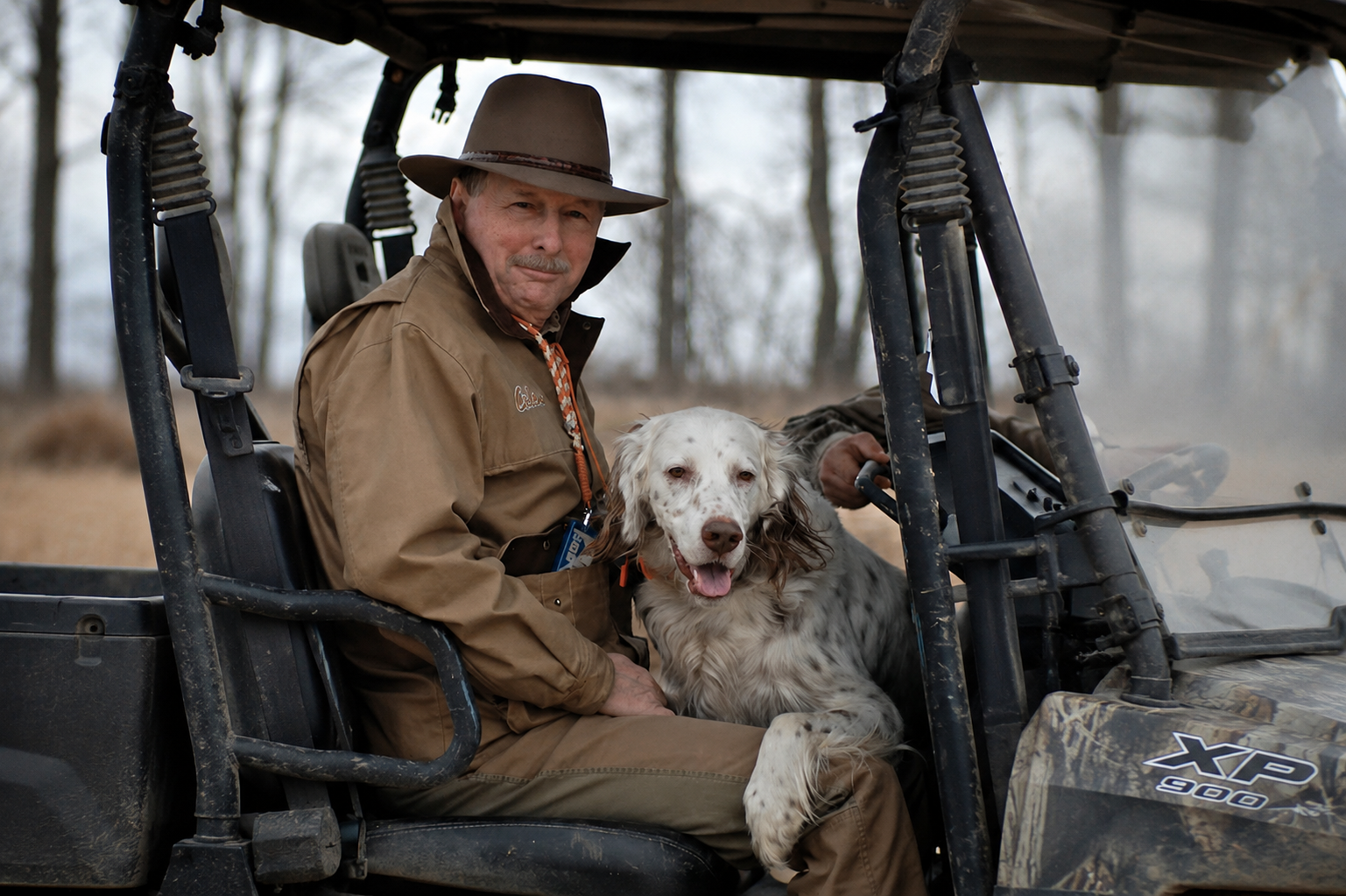
The best bird dogs become part of the story.
Today I find myself raising Phinnigan.
Like every bird dog owner before me, I want him to succeed.
I want him to find birds.
I want him to handle kindly.
I want him to become a dependable hunting companion.
But more than anything, I want him to enjoy the journey.
The truth is, I don't know exactly what kind of bird dog Phinnigan will become.
And that's okay.
I enjoy watching him discover the world one day at a time.
I enjoy seeing him work through new situations.
I enjoy the mistakes.
I enjoy the victories.
I enjoy the process.
Will he ever be a champion?
Probably not.
Will he ever be the most polished dog in the grouse woods?
Maybe not.
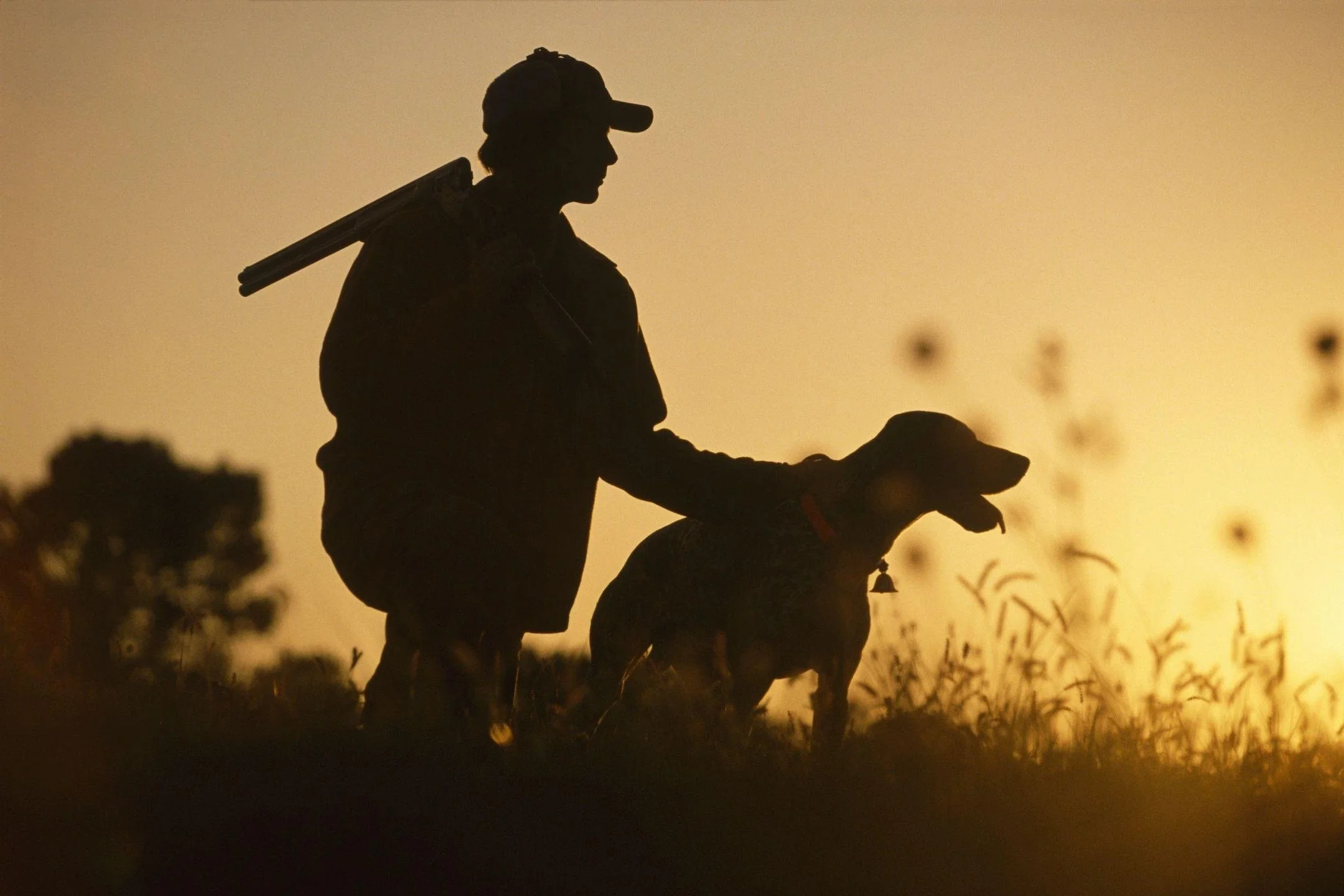
Years from now, I won't remember every command Phinnigan learned. I'll remember the adventures we shared together.
But if years from now he's lying beside a campfire after a long day afield, and we've shared hundreds of miles, countless sunrises, and memories that neither of us will ever forget, then I'll consider the experiment a success.
The older I get, the less interested I become in perfection.
The dogs I remember most weren't always the best-trained dogs.
They were the dogs that became part of the story.
The dogs that rode in the truck.
The dogs that slept by the fire.
The dogs that made ordinary days in the field unforgettable.
There is nothing wrong with striving for perfection.
But there is also nothing wrong with simply wanting a hunting partner.
In the end, the best bird dog isn't necessarily the one with the most titles or the most polished manners.
The best bird dog is the one that helps you enjoy your time afield the most.
And for me, that's exactly the dog I'm hoping Phinnigan becomes.