No Headlines. Just Winter Water
There are no hatches that make headlines in winter. No crowded banks. No easy illusions.
Just cold water, pale light, and trout that make you earn every inch.
On Pennsylvania limestone, along the Yellow Breeches Creek, the quiet bends of Letort Spring Run, the long runs of Penns Creek, and the steady flows of Big Spring Creek, winter reveals what these waters truly are: spring-fed, stable, and quietly alive beneath the frost.
For me, this is where it all began.
I didn’t start on some sweeping Western river. I started here, on limestone, on mornings when frost silvered the banks and your fingers burned tying knots. I didn’t understand groundwater temperatures or subtle midge hatches. I didn’t yet grasp how critical fly size and presentation would become.
I just knew I wanted to be there.
My casts were clumsy. My drifts imperfect. But the river didn’t push me away.
It invited me to learn.
One winter morning on the Yellow Breeches, I might as well have been standing on the moon. My fly box lay open beside me, filled with unfamiliar patterns, gifts from seasoned anglers and impulse buys from the local shop. The limestone current moved with a quiet confidence I didn’t yet understand.
Then I felt a tap on my shoulder.
A weathered angler placed a simple dark Woolly Bugger in my palm.
“Nothing fancy,” he said. “They rarely turn it down.”
I tied it on with cold fingers and made a cast. Then another. The first few passes brought nothing, and I began to wonder if this would become just another fly in my growing collection, another hopeful idea that never quite earned its place.
So I slowed down. I let it sink deeper. As I pulled it across the current, I gave it the slightest twitch, just enough to imitate a cold or wounded baitfish struggling in winter water.
Bam.
The hit was hard and sudden. The rod jolted. The line came tight. The fight was on.
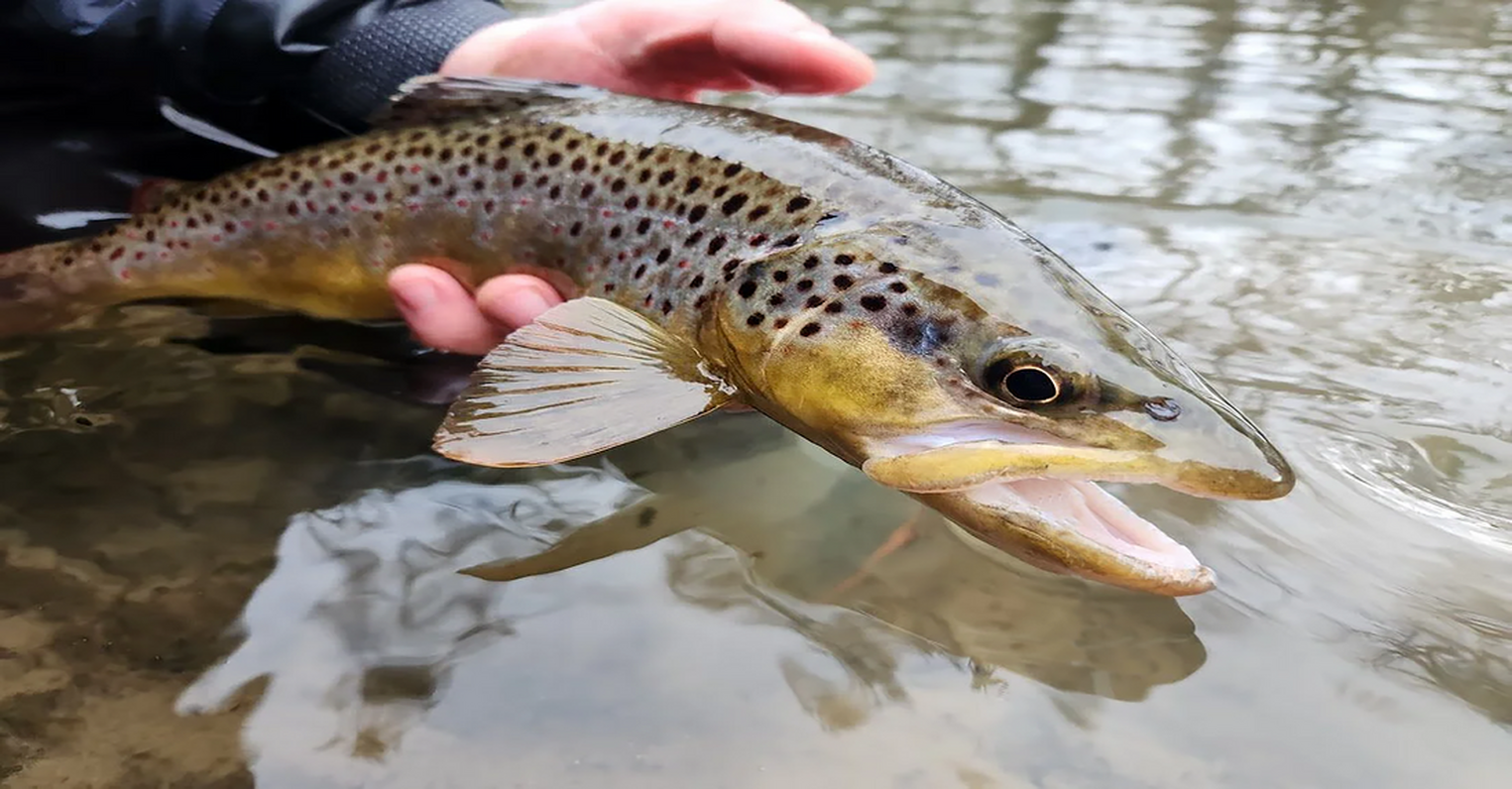
A brown trout, golden-flanked, butter-bellied, and powerful in the icy flow, thrashed at the surface. That day I didn’t just land a winter trout. I learned about patience. About movement. About trusting the fly you tie on.
And in that frozen current, something shifted. Doubt turned into belief. I left the banks of the Yellow Breeches with more than a fish, I carried a new understanding of aggression, intention, and rhythm in the water. That moment became part of my origin story as an angler, the quiet turning point when streamer fishing stopped being an experiment and became part of who I was.
But winter on limestone teaches in layers. Once you begin paying attention to one lesson, the river quietly offers another.
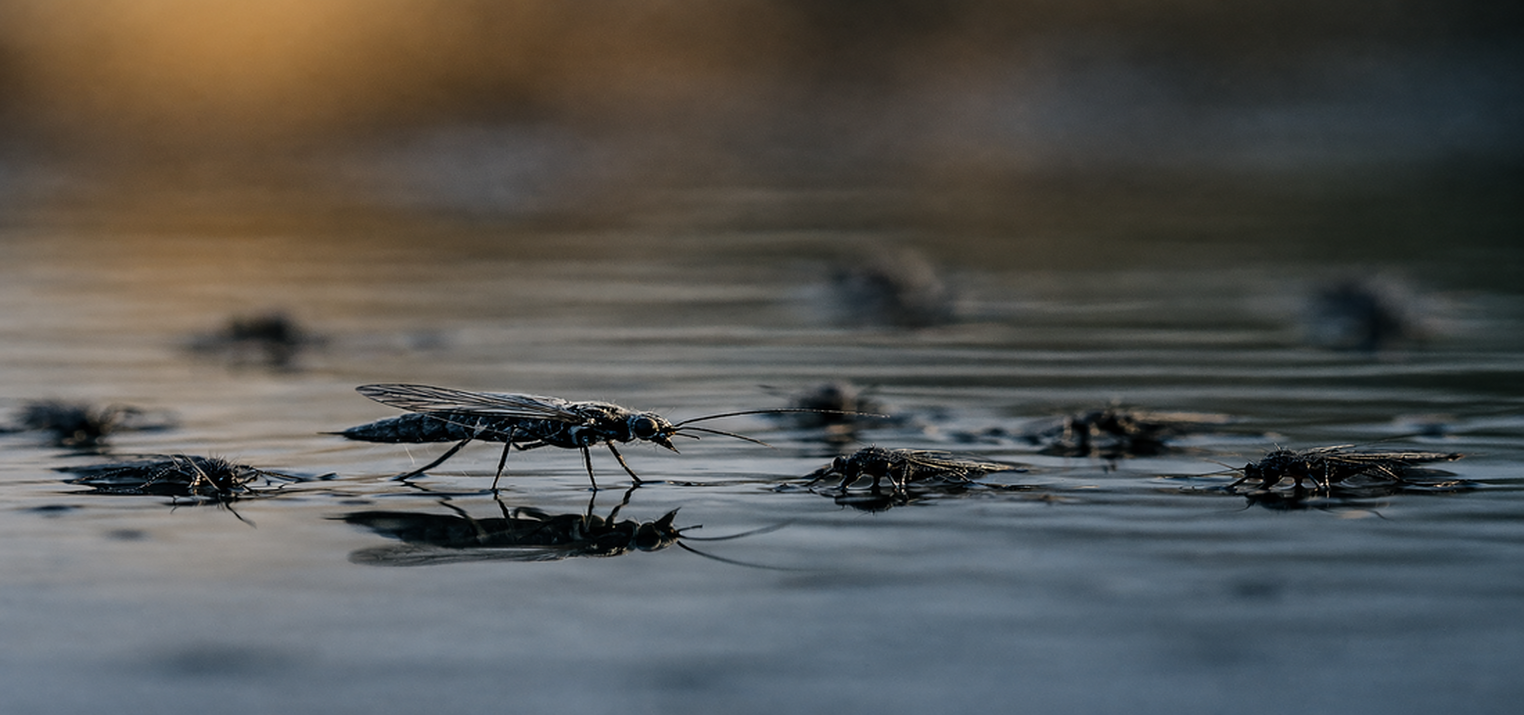
Not long after, I noticed tiny dark stoneflies crawling across the snow along the banks. Most anglers overlooked them.
The trout didn’t.
When temperatures inch upward and the snow softens, those winter stoneflies emerge and tumble into the drift. Trout slide from their winter lies to intercept them. One of my first real breakthroughs came when I finally paid attention to that crawl along the snow. I tied on a small nymph that resembled the natural and drifted it deliberately through a slow seam.
The take was firm. Certain.
Proof the river was far more alive than it appeared.
That’s the gift of limestone. These streams breathe steadily through winter. Springs hold temperatures stable. Midges hatch almost daily. Blue-winged olives appear on softer afternoons. Life continues, quietly.
These waters don’t shout. They whisper. And over time, you learn to match their tone: long leaders when needed, fine tippet for sippers, a simple Bugger when the moment calls for it.
Winter strips everything unnecessary away. No hero casts. No ego. Just observation and adjustment.
When I step onto those waters now, I’m not just chasing trout. I’m revisiting the place that made me a fly fisherman, the frost, the midges, the stoneflies, the steady weight of a winter trout in cold current.
This is where I learned fly fishing isn’t about spectacle. It’s about awareness.
This is where I started.
And each winter, it’s where I return, not just to fish, but to remember.