Early Season on the Upper Delaware
There’s a moment each spring on the Upper Delaware when everything shifts.
The long, quiet winter loosens its grip. The river swells with snowmelt, the air carries just a hint of warmth, and if you’re paying attention, you’ll notice the first real sign of life: insects.
Not many. Not yet.
But enough.
And for those of us who have spent time on these waters, we know what that means, the season has begun.

The First Hatches: What to Look For
Early season on the Upper Delaware isn’t about blanket hatches or reckless rising fish. It’s more subtle than that. Technical. Honest.
The first insects you’ll encounter are typically:
Blue-Winged Olives (BWOs)
Size: #16–20
Conditions: Overcast, damp, cool afternoons
Water: Slower seams, soft edges, tailouts
These are often the first real opportunity to find consistent rising fish. The takes can be quiet, just a sip, a dimple, a subtle ring on the surface.
Quill Gordons
Size: #12–14
Conditions: Warmer afternoons, slightly higher flows
Water: Faster riffles and pocket water
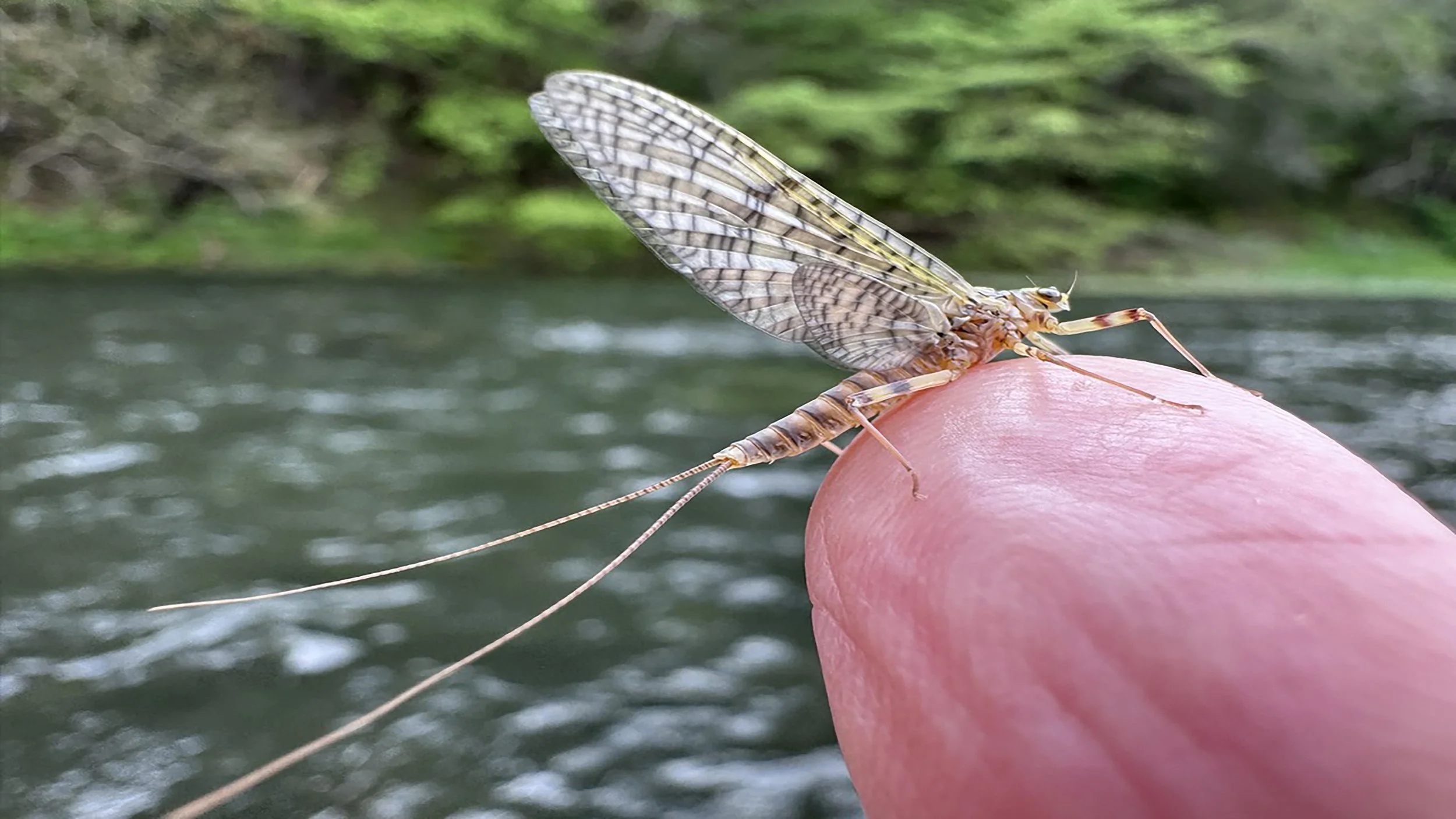
Quill Gordons are a bit of a wild card. They hatch in quicker water, and trout often key on emergers rather than fully formed duns. If you’re not seeing surface eats, it doesn’t mean fish aren’t feeding.
Hendricksons
Size: #12–14
Conditions: The true kickoff hatch, midday to late afternoon
Water: Transitional water=, riffles dumping into pools
If there’s one hatch that signals spring on the Upper Delaware, it’s the Hendrickson. This is when things start to feel real.
You’ll see fish move with purpose. Heads breaking the surface. Rhythm. Confidence.
Reading the Water in Early Season
Early season trout aren’t going to burn energy unnecessarily. The water is still cold, flows can be up, and food is just starting to become available.
Focus on:
Soft seams near faster water
Inside bends with reduced current
Tailouts where food collects
Edges of riffles—not the heavy middle
If you find one rising fish, don’t rush it. Watch. Learn its rhythm. These fish will teach you more than any book ever could.
Presentation Over Everything
This time of year will expose sloppy fishing quickly.
Long leaders (9–12 ft, often 5X–6X)
Drag-free drifts are non-negotiable
First cast matters more than the tenth
Fish are selective and deliberate. They’re not eating everything, just what looks right.
And if your fly isn’t behaving naturally… it’s not getting eaten.
Matching the Moment
You don’t need a massive fly box early in the season. You need the right flies, and the discipline to fish them well.
Confidence Patterns:
Parachute BWO
CDC Comparadun (BWO & Hendrickson)
Hendrickson Comparadun
Quill Gordon Emerger
Pheasant Tail Nymph (#14–18)
Soft Hackles for swing presentations
A well-presented simple fly will outfish a perfect imitation with a poor drift every single time.
Timing is Everything
Early season hatches are not all-day events.
BWOs: Often mid to late afternoon, especially on cloudy days
Quill Gordons: Short windows, be ready
Hendricksons: Typically late morning into afternoon
If you’re there at the wrong time, you might think nothing is happening.
If you’re there at the right time…
You’ll remember it all year.
A Personal Note
Some of my earliest days as a fly angler were spent on Pennsylvania limestone streams like the Yellow Breeches and Letort, but it was the Upper Delaware that truly refined my understanding of hatches.
The patience. The observation. The humility.
I remember standing knee-deep in cold spring water, watching a single fish rise over and over again, refusing everything I threw at it.
Until I slowed down.
Until I paid attention.
Until I matched not just the hatch… but the moment.
That’s what the early season teaches you.
Final Thought
The early hatches on the Upper Delaware aren’t about numbers.
They’re about earning it.
About shaking off the rust. About reconnecting with the rhythm of moving water. About those first rising fish that remind you why you keep coming back.
Because around here…
The journey matters as much as the catch, the flush, or the harvest.